


Menu
By theme
By theme

{{ variable.name }} : {{ variable.values[selectedVariantsIndex[variable_index]].name }}
Quantity:
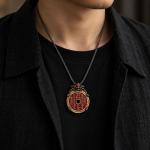
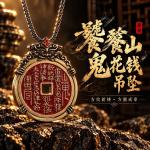
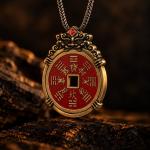
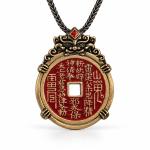
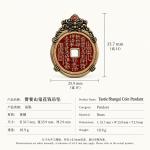
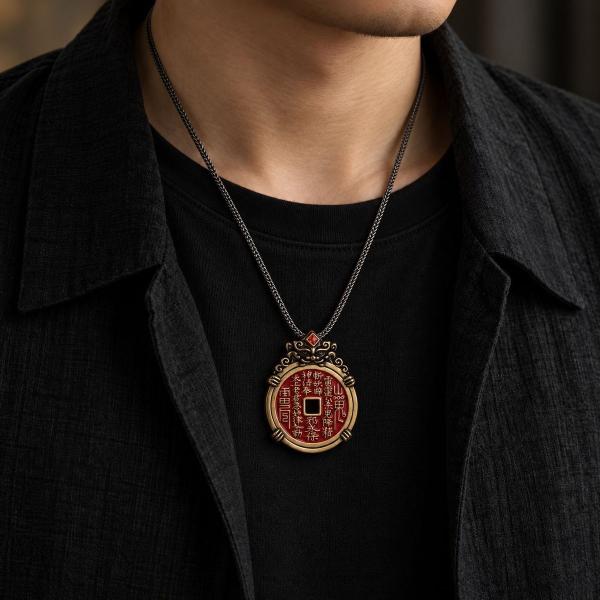
The mountain ghost coin is a kind of yasheng coin: never circulated, made to be carried or hung. The face usually carries a ring of incantation text opening with the two characters for mountain ghost, and the back often shows the eight trigrams or a thunder pattern. These were common in the old days and exist in great variety, differing in the cutting of the characters, the square hole and the rim. A flower coin is money not meant to be spent; what you are buying is the pattern and the good saying attached to it. Song dynasty catalogues already listed them, under the name yasheng qian, with more categories than anyone uses now.
The taotie is a second layer. The animal-face motif on Shang and Zhou bronzes was long called the taotie; archaeologists mostly say animal mask these days. A head with no body, two large eyes, a ridge of nose between them, horns spreading to either side. The horns run two ways, ox and ram — ox horns level, ram horns curling — and the direction dates the style. Putting a mask and a coin onto one piece joins two subjects. Done well they answer each other; done badly it is two objects stuck together.
The danger in joining them is clutter. Mask on the upper half, coin shape below, one border line between, and the two stop fighting. The depth of the relief has to sort primary from secondary: mask high, coin text low, so the eye finds the face first and the characters after. The dividing line cannot be too heavy, or it looks as if the plaque has been roped round the middle. The square hole is called the chuan; a worn round one has seen use, a new casting is sharp and square. And the outer rim wants rounding, so it does not hurt when it meets your face.
The dark tone of white copper comes from antiquing. Black is left in the hollows, the high points wiped bright, and the mask’s eyes come alive; all-over bright is flat, like something stuck on. The black is bitten in with a chemical rather than painted, so it will not rub off. Never soak an antiqued piece in silver dip — one bath and it goes white, and months of work are gone. Hand sweat does a slower version of the same thing: worn often, the high points brighten and the hollows deepen. The characters need depth, or the black has nowhere to sit.
The subject cannot avoid the words “warding off evil”, but do not oversell it. Hanging a yasheng coin was a custom, kept for peace of mind; it guaranteed nothing. If a customer asks whether it works, say it is an old subject made the old way — wear it if you like the pattern, and promise nothing beyond that. Navy or ink-green cord suits these pieces; red looks cheap against them. Say plainly that it is an antique-style piece before you give it, so nobody carries it off for appraisal. That ends badly for both sides.