


Menu
By theme
By theme




{{ variable.name }} : {{ variable.values[selectedVariantsIndex[variable_index]].name }}
Quantity:
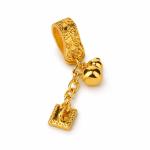
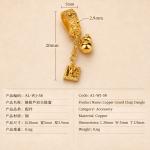
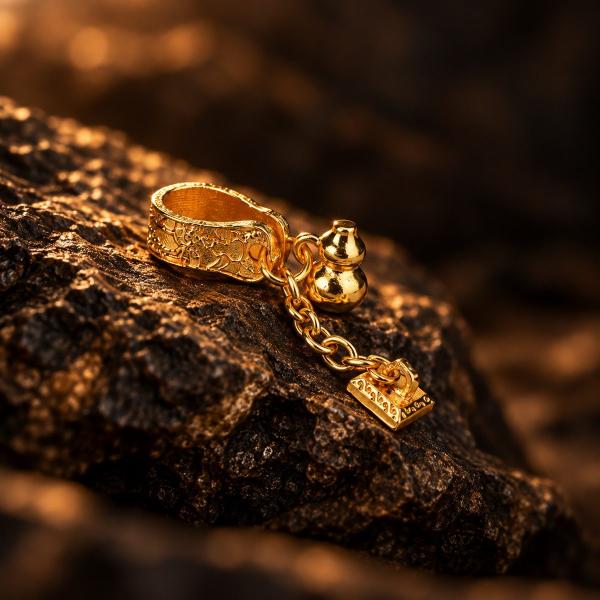
The clasp is the joint of the whole dangle. One end joins the bracelet, the other hangs below, and whether it holds comes down to this part. Using a gourd as a clasp puts form and function in one place: the top closes into a hanging loop, the bottom is drilled to take the chain. The loop has to pass doubled cord, or the work is wasted. Its inner diameter must match the bracelet cord — loose and it slides, tight and it will not go through. This is the part that takes the most wear and the last place to economise.
The square plaque sits in the middle of the chain and acts as the visual stop. The face is flat, so it can be engraved or left blank; a raised line around the four edges lets light travel the border and keeps the plaque from going dead. How many links to use depends on the total length — three to five is usual, more drags. If the plaque can be turned, work both faces so it does not matter which way it lands. Engraving needs a margin; cut to the edge and it chips. And the links should all be the same size; mixed sizes look messy.
The rhythm runs clasp, chain, plaque, chain, tail. Each section should step down in weight, the clasp solidest and the tail lightest, and then the eye reads it smoothly. Finish the tail with a small bead or a ring so it does not simply stop. Leave a little space between sections, and metal on metal rings pleasantly. Too many links and it slaps the hand; too few and it looks stubby. The middle range is steadiest. Keep the clasp opening facing inward so it does not come off.
The moving parts are what wear out. Every link has to turn freely, and a soldered link deforms under load. Pull it gently when it arrives and listen — a knock means a link did not close properly. If the ends of a link do not meet, pinch it lightly with needle-nose pliers, not hard. Metal pieces mark one another, so store them apart. Oil is worse than a dry cloth: oil attracts dust, and the more you oil, the dirtier it gets.
Hang it at the side of the bracelet, not directly under the guru bead, where it covers the main beads. For a friend who collects strands, fittings like this are easier to choose than a bracelet, since size does not come into it and colour is all that matters. The gourd’s blessing-and-income reading still applies; say it once and stop. A chain can be shortened later but never lengthened, so err on the long side. This dangle suits a plain strand. On one with carved beads, neither shows to advantage, and on an old strand it looks best, because a new one is too bright to carry its age.