


Menu
By theme
By theme




{{ variable.name }} : {{ variable.values[selectedVariantsIndex[variable_index]].name }}
Quantity:
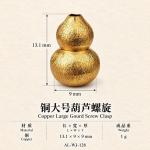
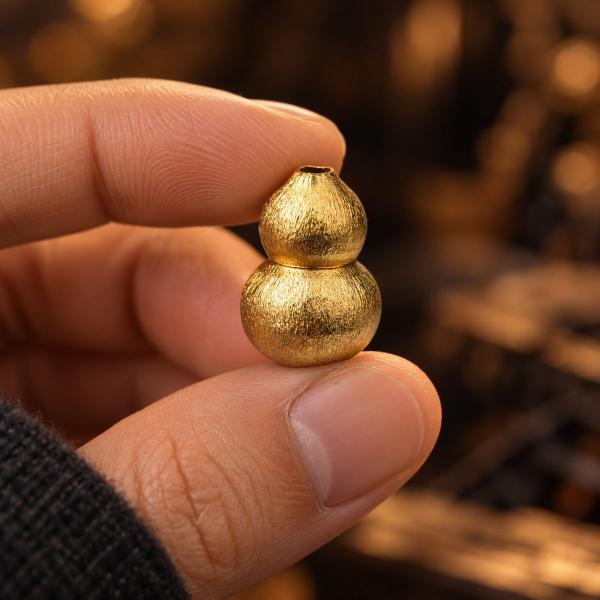
An openable gourd unscrews or lifts open, hollow inside, and holds something. In the old days these small gourds carried pills, incense, sometimes cinnabar; now mostly a small bead or a folded slip of paper, kept private. What goes inside is the owner’s business and the shop does not ask. A shred of incense in the lid leaves a trace of scent after a while, cleaner than anything sprayed. The thread on the lid must run true. Force it and it seizes, and a seized thread means a repair.
Brushing is a surface treatment. An abrasive belt drags parallel fine lines across the metal so the light spreads into a band instead of glaring. The direction has to stay consistent; cross the grain and it looks messy. Fine lines also hide fingerprints and are easier to live with than a mirror, at the cost of scratches following the grain and merging over time. The grain should run along the long axis of the piece; take it across and the form loses its line. Do not wipe a brushed piece back and forth with a cloth, because lint lodges in the grain and it goes fuzzy.
The closing joint is the whole thing. A loose lid opens on its own after two steps; a tight one you cannot get a fingernail under. The good solution is an inner step, so the lid seats with a click you can feel. On threaded versions judge the pitch: too fine and it cross-threads. Turn it a dozen times before buying and you will know at once. Dropping is the real enemy — one fall deforms the joint, the lid will not seat, and it never goes back to what it was. The mouth has to be round; oval and the lid sits off-centre.
The waist is the weak point. Opening the gourd means cutting it at the middle, and the cut faces must be flat for the halves to close without rocking. A cut in white copper oxidises dark, and in time a black ring shows in the seam. That is normal, and not something to scrub at. If you want the seam to disappear, take the antiqued version, where black already sits in the hollows. The inside darkens untreated, so line it with soft cloth before putting anything in. White copper dislikes ammonia, so do not experiment with household cleaners.
It hangs on a bag, on keys, on a bracelet. Nothing liquid inside, and nothing sharp, which rattles. As a gift, the reading is capacity: a gourd’s belly is large and holds things. That is more restrained than talk of wealth and sounds more like something a person would actually say. If you do put something in, a small wad of cotton at the bottom stops it knocking. On a keyring, do not choose a large one, because it bulges in a pocket and other keys pry the lid open. And do not overfill it, or the lid will not close.