


Menu
By theme
By theme






{{ variable.name }} : {{ variable.values[selectedVariantsIndex[variable_index]].name }}
Quantity:
A spacer disc sits between beads and does three jobs: it protects the beads, holds the spacing, and adds a layer. Wood and bodhi seed rub against each other and fuzz up over time; put a metal disc between them and the wear lands on the disc. The disc takes the rubbing on the beads’ behalf, so thin is no problem as long as it is not warped. A disc is not a spacer bead: it is thin, takes up little room, and several will fit on one strand. The hole must match the cord — too large and the cord sits loose, too small and it will not pass.
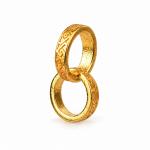
The double ring is two discs formed as one with a groove left between them. The groove gives the cord somewhere to run so the disc will not tilt when the strand is drawn tight. The diagonal pattern runs round the face, one slant all the way across, and the light follows it. The two discs must be pressed together; loose, and they pinch the cord. The groove has to match the cord gauge: wide and the cord wanders, narrow and it will not thread. The solder joint hides inside the groove where it cannot be seen, which is part of why the piece costs more than a single disc.
The diameter of the disc should follow the main beads. Larger than the bead and it looks like a flying saucer; smaller and it vanishes inside. Usually it runs slightly under the bead diameter, so just a rim shows. If the beads have wide holes, the disc’s hole has to follow, or the cord knots against the edge. Chamfer the outer rim on the front face, where the light can gather. Keep the diagonal angle consistent: a degree out is invisible, five degrees and it looks wrong. A double ring is thicker than a single and will stand out between small beads.
Thin white copper tends to warp when it is stamped. Lay it on a glass surface and you know at once; a warped disc strung into a strand throws the whole line off. Chamfer the mouths of the hole or the cord gets cut. If a burr is left on the edge, take fine sandpaper along it rather than a file. White copper fogs over with wear and a silver cloth brings it back; toothpaste does not. And do not grip the edge with pliers, which leaves tooth marks in the metal.
How many discs go on a strand depends on the bead count. A strand of a dozen or so takes two to four; with fewer beads, one is enough to make the point. A piece like this carries no meaning — it is craft and proportion, and saying so plainly makes you sound like you know the work. Do not let disc and bead both compete; one bright note per strand is enough. Space them evenly, because crowded at one end the strand hangs crooked. And no more than four metal discs, or the bracelet turns into a chain.