


Menu
By theme
By theme




{{ variable.name }} : {{ variable.values[selectedVariantsIndex[variable_index]].name }}
Quantity:
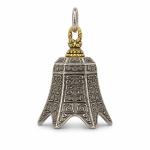
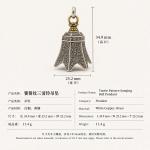
A bell as a pendant takes the vessel itself as its subject. An old bell is round in section and opens wider towards the bottom, with the rim thickened into what is called the lip. Shrunk to the size of a pendant, the body keeps that taper — narrow at the shoulder, wide at the mouth. The suspension loop on top is where it once hung; as a pendant it becomes a ring. The pattern on the body divides into three bands: a ring at the lip, a field on the belly, a band at the shoulder. Clear layers are what keep it from going dull. And the inside of the mouth should be drawn in; too thin and it looks like sheet metal.
The taotie spreads across the body with the fret pattern as ground. Mask above, fret below — one primary, one ground. The fret is a continuous squared meander, common on Shang and Zhou bronzes, running on without a break. A broken fret was once considered a fault, though the people making them now may not care. The corners must be square: round them and the pattern becomes cloud scroll, and that corner is the whole difference between the two. The mask’s eyes should bulge. Flat, and there is no spirit in it, and the eyes are where the piece breathes.
A bell needs a clapper before it rings. This is a pendant, so most have none and swing in silence; the versions with a clapper do ring, but briefly, because the metal is thin. If you want sound, ask before buying rather than discovering at home that it is mute. A pendant that rings is not really the point; if you want a bell, buy a bell. Clappers are usually a copper bead — too large and the note is dead, too small and it is shrill. The width of the fret must be constant, since unevenness is the cardinal fault. Best of all, leave the shoulder band blank.
White copper rings duller than brass, which makes it better for a plaque than for a bell. That is why pieces like this are looked at rather than listened to. The mask should stand high and the fret stay shallow; separate the depths and the light finds layers. The lip should be thick — thin, and it looks like the rim of a paper cup. White copper is not coloured; polish and antiquing are what divide the surfaces. Antiqued it goes dark, which is right with a dark cord and dirty with a red one. White copper dislikes sweat, so wipe it after a summer day and it darkens less.
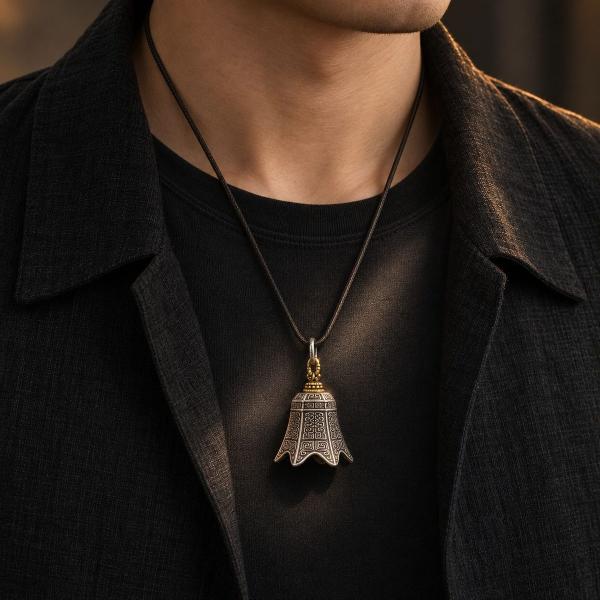
Hang it with the mouth down, which is how a bell hangs. Some people like it reversed and say it looks as if it is gathering something, but that goes against the form. Some elders will not give a bell at all, since the word sounds like the one for an end; ask first, or simply call it a ling. Younger people do not mind and it can be given as it is. On a bell pendant, do not use a short chain, because it sits on the throat and is uncomfortable. These knock against clothing as you walk, so a chain that is too fine will not last.