


Menu
By theme
By theme


{{ variable.name }} : {{ variable.values[selectedVariantsIndex[variable_index]].name }}
Quantity:
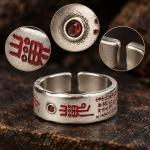
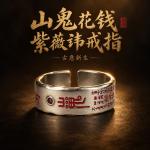
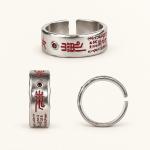
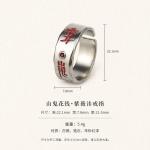
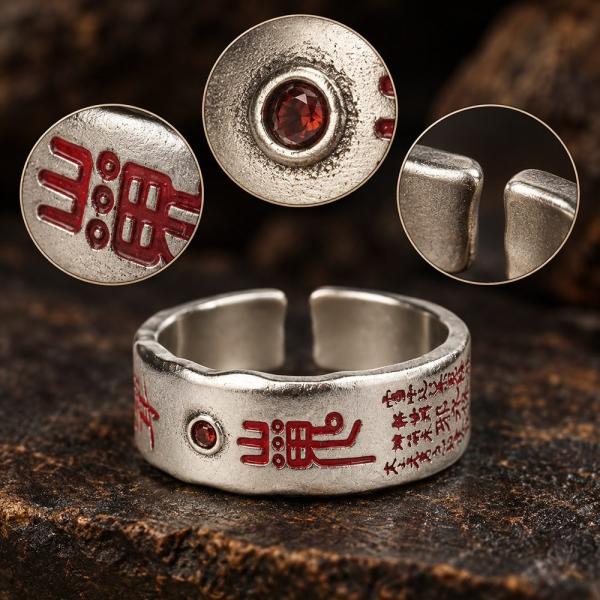
Carve a taboo character into a ring face and at first glance you will not recognize a character at all. The form stacks the components for rain, gradual, and ear one on top of another, the strokes borrowing space from each other, and it is not read the way it is written. A hui character is close to a name without being one; cut into an object, it takes on the work of guarding a path. These characters have their own rules of transmission in Daoist texts. Copying the outline until it looks similar is not the same thing.
On this ring the character fills the entire face, and the strokes are dense, which is exactly what casting blurs. A hair deeper and the polishing cannot reach; a hair shallower and it reads as a smudge from a distance. White copper flows well, so fine strokes are less inclined to merge, and the yield is steadier than with brass. Judge the work at the turns: where strokes overlap, a sliver of gap should still survive. If it does, the mould passed. The floor of each groove should be flat, because a slanted floor catches light and makes the cut look shallow. With dense strokes like these, most white copper rejects are rejects because of the character.
The band is open, so the size can be adjusted, but there is one rule with a character ring: never bend the face. Grip the band at the sides, away from the inscription, and add pressure slowly. White copper is tough enough for a millimetre or two in a single adjustment; work it repeatedly and a crack opens at the tail of a stroke. Once cracked, the character is broken and cannot be repaired. When you have it where you want it, press the two sides of the face between finger and thumb — if it does not give, it is settled.
Much of the ring’s weight lies in not knowing the three characters. Someone who knows the system sees a taboo character at once; someone who does not takes it for an odd pattern, and neither party is embarrassed. It sits better on the index or middle finger than the ring finger, face outward, so that a handshake shows half and hides half. A loose shirt cuff will swallow it; if you want it seen, do not wear a loose sleeve. And if your knuckles are heavy, turn the gap inward so it does not catch on cloth.
One thing should be said plainly. In Daoist practice these characters belong to the tally tradition, the same family as the inscriptions for mountain ghosts and the Five Thunders found on charm coins — but each has its own use, and they cannot be talked about as one thing. Wearing it yourself is fine. Giving it depends on whether the recipient has any feeling for this world; someone who does not will simply keep it as a pattern. The shop never claims that it works. We talk about the casting and the source, and there is less to argue about afterward. If a customer asks how the character is pronounced, say that it is not pronounced. That is more honest than inventing a reading.