


Menu
By theme
By theme



{{ variable.name }} : {{ variable.values[selectedVariantsIndex[variable_index]].name }}
Quantity:
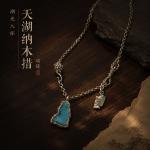
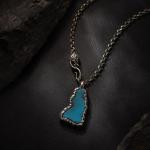
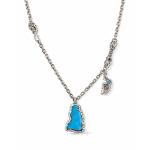
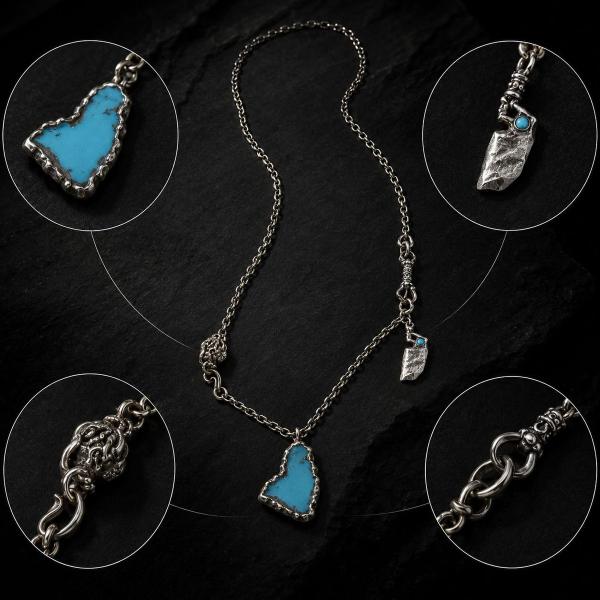
Turquoise is never one flat colour. Natural stone carries matrix lines and varies in depth, some stones bluer and some greener, with transitions visible even within a single piece. This necklace sets turquoise against white copper, the cool metal supporting the blue-toned stone, so the colours do not compete and the stone looks deeper. When choosing, do not fix on the bluest stone alone; an even tone across the necklace matters more. Matrix lines are what make turquoise look natural, so be wary of stones that are too clean.
Namtso lies on the northern Tibetan plateau. In Tibetan the name means heavenly lake, and it is a salt-water lake. Walking round it is an old local tradition, a circuit measured in months. The necklace takes the name for the colour of the water and that sense of openness rather than copying a specific motif. Knowing where the name comes from gives you a picture to hold while wearing it, and that is enough. The colour of the lake shifts with the weather, so there is no settled answer between blue and green.
Turquoise is porous, and that is what makes it delicate. Sweat, oil, perfume and sunscreen are all absorbed, the colour deepens gradually, and the change cannot be reversed. A white copper backing blocks some contact, but the edges of the stone are still exposed. If you sweat a lot in summer, wear it over a collar or save it for cooler seasons. A seller has a duty to be clear about how turquoise dislikes sweat.
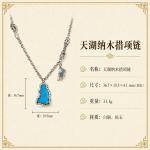
The ratio of metal to stone is what makes or breaks a necklace like this. Too much metal and it looks manufactured; too much stone and it feels heavy. Here the weight sits mainly in the pendant head, with the chain kept fine so the whole looks light. The metal will dull over time, which suits the old colour of the turquoise, so there is no need to polish it bright. If the stone in the head is composite, there will be a glue line at the edge, so look closely when it arrives.
For styling, turquoise is safest with white, cream and pale blue, and easily cheapened by strong red or green. A lower neckline lets the pendant sit below the collarbone, where the colour can show. Take it off before showering, since turquoise dislikes hot water and shampoo. If it goes unworn for a long time, wrap it in a soft cloth and keep it away from desiccant, because losing moisture will crack it. The chain is fine, so the point where the pendant hangs should be reinforced rather than relying on a single ring. The colour of turquoise deepens with wear, and that is part of what it is.