


Menu
By theme
By theme


{{ variable.name }} : {{ variable.values[selectedVariantsIndex[variable_index]].name }}
Quantity:
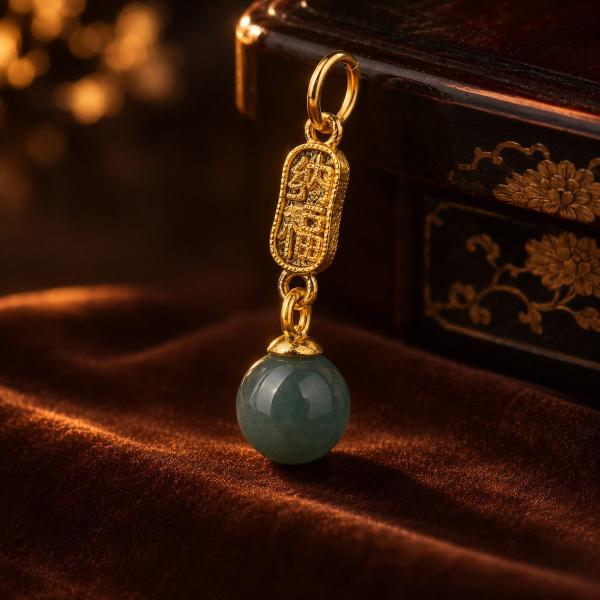
A small charm hung at the tail of a strand, swinging gently as you walk, is called a didiu in the trade. The word carries its own sound, and the name comes from the motion. Northern stalls say didiu; some southern ones call it a foot-drop, and both mean the same class of thing. At a stall, ask the name first and the price second. Length is a choice: a short one sits against the tail, a long one can reach the base of the finger.
Half of whether a drop looks right is in the connection. The top ring has to turn freely; leave the gap too wide and the charm works itself off, make it too narrow and the cord will not pass. Better pieces use a swivel ring, which turns without binding so the charm follows the wrist instead of forever facing one way. A ring that does not close properly will be lost somewhere on the road, and you will not find it again. Keep a little play between ring and charm — clamped dead, it cannot swing, and then it is only a lump of metal.
Metal is lighter than stone, so it does not pull at the hand. The weakness is the same fact seen from the other side: too light a drop flutters, and walking briskly it whips about like a lash. Shake it in the hand before buying. One that swings evenly and settles without wobbling is the one that will hang well. A heavier piece holds its ground better beside old beads. And a drop without enough weight has one more fault — a breeze presses it flat against the wrist as though it were stuck there.
It is not only for bracelets. Bag charms, fan drops, car keys, zipper pulls. On a zipper keep it short or it jams inside the bag; as a fan drop it must be light, because a heavy one strains the ribs. Earrings work with a pair of fine hooks if the weight is something you can carry all day. On a car key, keep the cord short or it catches in a pocket when you get out. On a bag, use a thicker cord; a fine one will saw at the strap.
In the accessory trade a customer often buys one piece and comes back a month later for a second. So avoid loud colours. Plain, antiqued, and matte finishes wear best and quarrel with nothing. If something on the strand is going to stand out, let it be the main bead. Buying two of the same model makes a pair, which moves faster than a single. And keep a few of each in both antiqued and plain, so that a customer has something to choose between.