


Menu
By theme
By theme



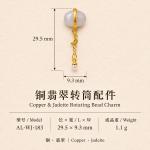
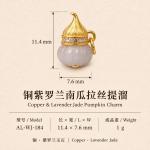
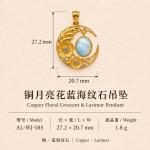
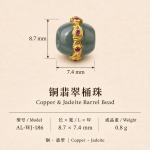
{{ variable.name }} : {{ variable.values[selectedVariantsIndex[variable_index]].name }}
Quantity:
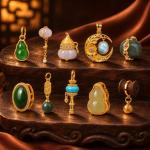
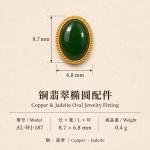
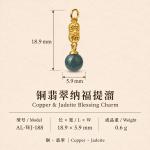
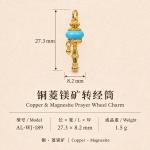
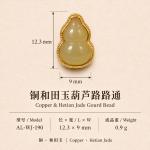
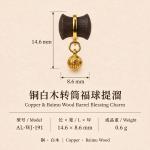
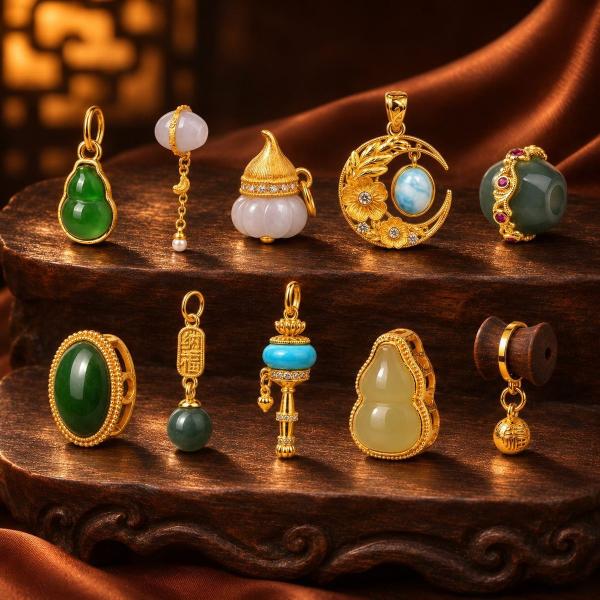
Six styles in this group: a jade barrel bead, a prayer-wheel component, a gourd slider, a brushed pumpkin drop, an oval component, and a blessing drop. The names sound like a jumble, but the uses fall into three classes. Barrel and oval separate. Prayer wheel and gourd hold the eye. Pumpkin and blessing hang. Sort the three classes in your head and you know how to lay out a strand. Of the six, the two drops are the most appealing and the two spacers the most practical. There is no need to buy all of them; start from what your strand is missing.
Spacers manage rhythm. A strand of beads in one material and one size looks dull, and a single metal bead gives the eye somewhere to stop. The barrel is a cylinder and takes up width; the oval is flat, and sits between two round beads without looking out of place. You do not need many — two or three in a strand is enough, and more turns the piece into a metal strand. If the jade barrel is on the dry side, metal beside it lifts it, which is the useful kind of contrast.
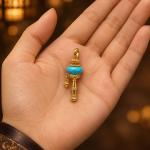
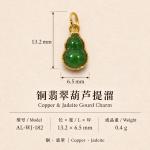
The focal piece manages the eye. The prayer wheel has a body, the gourd has a waist, and both pull attention. One per strand is enough; two will compete. Put it just above centre, on the outer face of the wrist, so that it shows when you raise your hand. The hole has to be generous, with the cord running through the middle rather than off to one side. If the hole is too small you will need a thinner cord, and the whole strand loses strength.
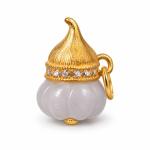
Drops manage movement. Hung at the tail, they swing as you walk, and a strand that was static acquires some motion. The facets of the pumpkin, the characters on the blessing drop, are details that only read at close range. No more than two drops, or the thing starts to sound like a bell. Their weight should be in proportion to the strand, since a heavy drop pulls the whole bracelet round. And keep them from hanging too far out, where they will knock against a desk.
Buying one piece or the set comes down to colour. Metal has only a few tones — white, yellow, antiqued — and if you buy the set at once, later additions do not send you hunting for a match. Customers often buy a single bead to try, then come back for the rest, and two trips cost as much as half a set. A set has another advantage: the plating from one batch is consistent, so no piece is darker than its neighbour. It also gives you a reference when you add beads later.