


Menu
By theme
By theme




{{ variable.name }} : {{ variable.values[selectedVariantsIndex[variable_index]].name }}
Quantity:
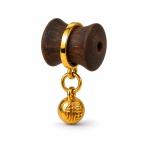
The outer cylinder stays still and the inner one turns, carrying the characters on its wall around with it: that is a prayer cylinder. A fu character on a turning cylinder means fortune in motion, which is an old trick and not a new one — the spinning teapots and spinning pendants of an earlier century worked on the same principle. What turns is the thought, not the luck, and that is as far as the idea needs to be pushed. The pleasure is in the hand: flick it with a finger and the characters come alive. Spin it fast and they blur; turn it slowly and they can be read.
At this size, tolerance is the difficulty. Too much clearance between the cylinders and the thing rattles; too little and it will not turn. Every batch produces a few that are tight, so try it a few times on arrival and, if it binds, put a drop of sewing-machine oil in the seam and work it back and forth. Not too much oil, which collects dust and leaves a black ring in the joint. A stamped inner cylinder will have a burr along its edge, and that burr will scrape your finger as it turns.
The form of the fu character matters. Regular script is upright with thick strokes and casts without clogging; running script has connecting strokes and fine passages that break at this size. Look at the cuts when you buy: clear strokes at an even depth and the work is sound. Check the orientation as well — turned through a full revolution, no character should appear upside down. Both upright and slanted versions are made; what matters is that the spacing holds all the way round. Turn it a hundred times when it is new, and the stiffness will wear off for good.
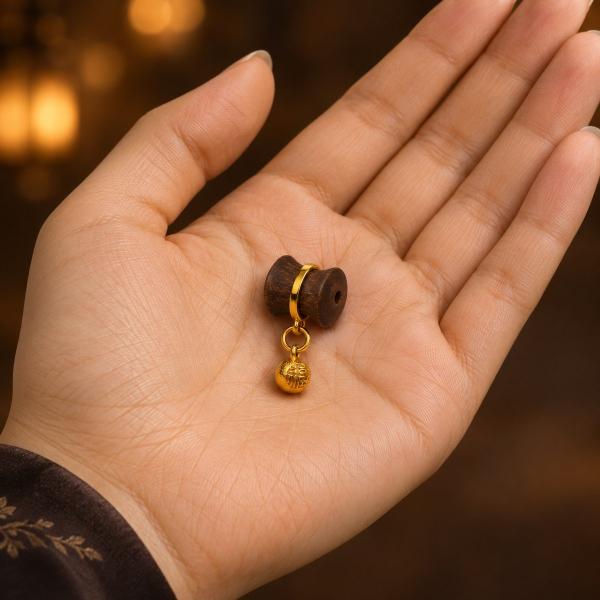
As a drop it works at the tail of a strand or on a bag. The cylinder has some weight, so it swings with a bit of gravity instead of fluttering like a flat piece. Check the rings: the cylinder is held between a top ring and a bottom one, and if either loosens, the cylinder is lost, in a car or on a road, with little chance of recovery. Keep it away from water, which rusts the seam and makes it stiff. If the rings are split, set the openings opposite each other or they will rub as it turns.
This sort of small thing is easy to give because it gives you something to say. Hand it over and let the recipient spin it twice, and “fortune turns” becomes an action rather than a line. It is not expensive, which makes it a good small gift, and buying several for colleagues costs very little. Add one instruction — do not force it — and the handover is complete. There are versions with shou and lu as well; three together make a more substantial present than one alone.