


Menu
By theme
By theme




{{ variable.name }} : {{ variable.values[selectedVariantsIndex[variable_index]].name }}
Quantity:
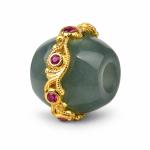
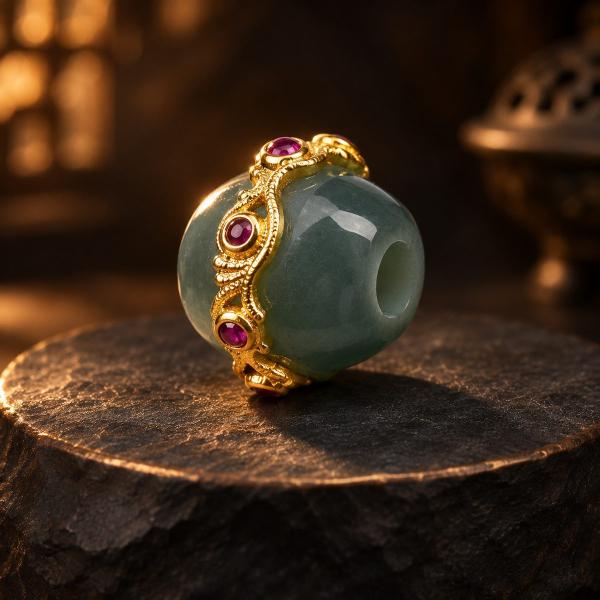
Do not judge oil-green jadeite against imperial green for brightness; it is not trying for that. Greyish, leaning blue-green, it is one tone among many in jadeite. Its virtue is that it wears well on the eye: not harsh under a lamp, deep in daylight. When the trade says oil, it means a greasy lustre rather than a dry grey, which is what the good stones have. Never judge it under a spotlamp — take it to a window and the colour drops a shade. The base may be coarse or fine: fine takes light, coarse looks woody.
The bezel is what makes this piece. A gold-plated copper frame grips both ends of the barrel bead. It protects the edge, which matters because jadeite is brittle, and it conceals: a small crack or patch of cotton at the rim disappears under the metal. This is an open practice in the trade, not a swindle, but you should know it is happening. If it bothers you, choose a bezel that sits shallow and leaves more stone visible. The prongs should hug the stone; lifted ones catch clothing and snap off. And a gap between metal and stone collects dirt that blackens and will not wash out.
The weakness of gold-plated copper is that it wears. A summer on a sweaty hand and the corners redden first, showing the copper underneath. This does not harm the jadeite, it only looks bad. To prolong it, dry the piece after wearing, do not wash your hands in it, and keep perfume away. Re-plating is possible but costs more than the bead, so most people do not bother. Where the plating is thin, a fingernail drawn across it will feel slightly rough — that is the copper beginning to show.
A barrel bead is a spacer, strung horizontally, flat at both ends, so it sits against round beads without a wide gap. The bezel increases the outer diameter, so the proportions of the strand have to be recalculated, and the beads it was meant to sit between may need to go up a size. If the two bezels differ in thickness the bead will hang crooked, so lay it on a table and let it roll when you choose. An off-centre hole will make it wobble, which you can see at once.
Oil-green costs a good deal less than imperial green, which makes it right for a spacer — nobody uses a full green cabochon as a divider. Judge these pieces on three things: evenness of colour, enough translucency, and neat bezel work. Two out of three and the price is fair. The stone dislikes dryness, so if it is going to sit unworn, put a scrap of damp cotton in the bag but do not soak it. Spacer material does not need to be perfect; even colour and no visible crack is enough.