


Menu
By theme
By theme

{{ variable.name }} : {{ variable.values[selectedVariantsIndex[variable_index]].name }}
Quantity:
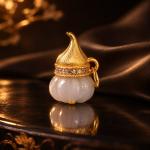
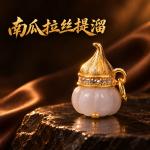
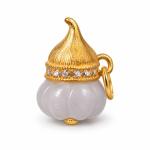
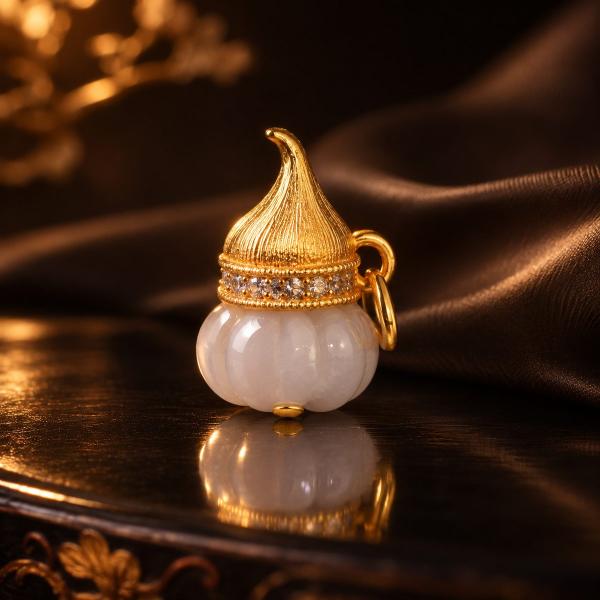
The ribs of a pumpkin run one after another, and cutting them is harder than it looks. It is an old motif, taken from the many seeds inside, and the image is more reticent than a fu character — and harder to make, because the ribs must be even and the depth consistent, and a small error reads as crooked. An old craftsman would fix the number of ribs first and divide the lobes from that. Set too many and each lobe narrows; too few and the fruit looks dull. On old pieces the ribs were pressed by hand and are not perfectly even, which is exactly what gives them life. The stem should be small. A big stem and the whole thing is top-heavy.
Brushing is a surface treatment: an abrasive cord is drawn across the metal in one direction, leaving fine parallel lines that scatter the light instead of throwing it back. It looks well and it is difficult to keep, because fingerprints and oil settle into the lines, and it must be wiped along the grain. Wipe across it and you cut the lines, and that patch then scatters light differently and cannot be put right. If the direction changes partway through the brushing, the change shows the moment light falls on it. That is a piece sent back for rework.
The ribs and the brushing compete. Ribs run vertically, so a horizontal brush cuts two sets of lines across each other and the surface looks muddled. The usual answer is to brush along the ribs, or to brush only the flat of each lobe and leave the bottoms of the grooves matte. Then the light falls and the ribs are bright while the grooves are dark, and the pumpkin appears out of the contrast. Leaving the grooves matte is not a way of saving labour; it is what makes the ribs read as ribs.
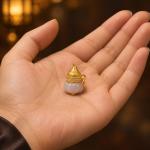
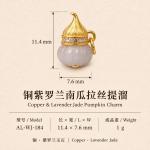
As a drop its size is moderate, so it hangs at the tail of a bracelet without getting in the way. The stem end carries the ring, the base points down, and it swings as a round shape. If the ring is soldered, check the joint; a piece formed in one go is stronger and costs more. It also works on a bag, since the ribs are not the kind of thing that snags thread. The ring will wear thin over years, and at about half its thickness it should be replaced. A soldered ring that has gone black was not cleaned of flux, and it will corrode with wear.
These small pieces suit a plain strand. An old bracelet with a pumpkin added at the tail gives both colour and shape somewhere to come to rest. Do not put one on a busy strand, where a busy drop leaves the eye nowhere to settle. Choose crisp ribs; a perfectly round blob loses the idea of the pumpkin. It should feel like it turns under the finger rather than rolling as one smooth ball. That is the difference between carved and moulded. Southern red and amber both sit well with it; with turquoise, judge the tone, since a pale green will fight.