


Menu
By theme
By theme


{{ variable.name }} : {{ variable.values[selectedVariantsIndex[variable_index]].name }}
Quantity:
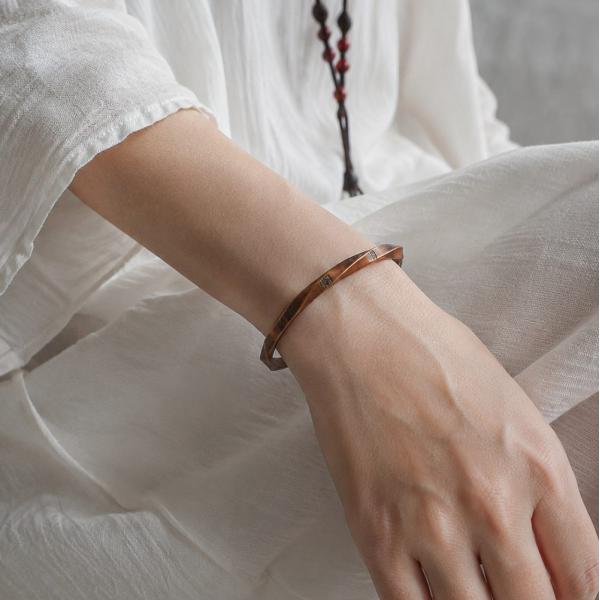
A solid bangle has to go over the metacarpals, and that is the step people skip. The hand at its widest is a size larger than the wrist, so a diameter measured at the wrist jams there; force it and it goes on, but every wearing takes a layer of skin. Buy by hand circumference: fingers together, measure around the base of the thumb. A finger’s width of difference changes how it feels completely. A narrow opening sits steady and will not turn; a wide one is comfortable but slides up the forearm when you move. Measure with the hand relaxed — a measurement taken with the hand clenched will always come out tight.
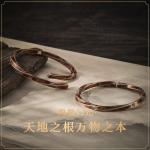
Brass runs gold, and new it is almost too bright; six months in it settles to the honey colour of old copper. Some people buy it for that colour alone. Brass is high in copper, and on a sweaty wrist it will leave a faint green ring that washes off — not a defect, just copper meeting sweat. To slow the change, wipe it with a dry cloth each time you take it off; to hurry it, wear it while you work and one hot summer will do it. The inside is what touches the wrist, so the polishing effort belongs on the inside; a bangle bright outside and rough within will rub the skin red in two days.
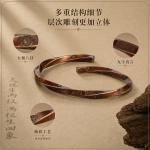
Cutting taiji and bagua into a curved surface, the two eyes of the yin-yang fish are where the work shows. Polishing a curve tends to flatten fine lines, so they have to be cut deep enough to survive it. The trigrams run three lines to a group, and long and short must be unmistakable; a broken line that reads as merely vague spoils the whole group. On poor carving the pattern exists at arm’s length and dissolves up close, and a finger dragged across it cannot tell yin from yang. The depth of the two halves matters as well: too deep and they read as two trenches, too shallow and they blur into one smudge.
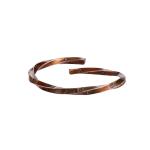
One on one wrist is enough; one on each looks like effort. Worn on the same arm as a watch it will knock, especially against the lugs, and brass being softer than steel it is the brass that loses. It can stay on in the shower, though soap leaves a white film in the cut lines — an old toothbrush, dry, takes it off in a couple of strokes. In summer a sweaty wrist makes the inside slippery and the bangle turns with a clatter; one wipe with a cloth and it goes quiet. The edges of the opening should be rounded over; a square edge presses a mark into the wrist bone.
In folk use bagua is a sign that turns away what should not come in, though plenty of people read it as pattern alone. To an elder you say something about peace of mind, to a friend something about things going smoothly — ordinary courtesy, nothing more. The real reason it stays on is that it never needs taking off: washing hands, sleeping, it is there, and after a while it belongs to the body. When choosing, do not stare only at the trigrams; look first at the seam in the band, because an unpolished seam will rub a sore spot within a month. Brass worn long takes on a layer of hand-polish, and that layer should not be scrubbed off with brass paste — once gone it does not come back.