


Menu
By theme
By theme




{{ variable.name }} : {{ variable.values[selectedVariantsIndex[variable_index]].name }}
Quantity:
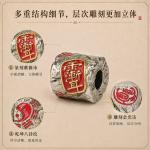
The three characters for rain, gradual and ear, stacked vertically, make the personal name of the Great Emperor Ziwei. In Daoism the names of gods are not spoken directly but written as combined secret characters, and read aloud they are still read “Ziwei”. Such characters are common on talismans; taken out and made into an object on their own is rarer. Those who know the character recognise it at once, those who do not take it for an odd talisman pattern, and plenty of people ask. Looked at apart, the rain radical sits on top like a talisman head, and gradual and ear are squeezed below with every stroke flattened.
Ziwei is the ruling star of the region around the pole star. The old astronomers divided the sky into three enclosures with the Ziwei enclosure at the centre, and the emperor’s residence took its name from that — the Purple Forbidden City. Wearing the name takes the sense of “at the centre, unmoved”, which is a different matter from the wealth gods. When explaining it, do not steer toward blessings; talk about the astronomy, about how the character is built, and it stands up better. The star officials inside the Ziwei enclosure have strange names — Celestial Bed, Celestial Prison, Canopy — all laid out like the rooms of a palace.
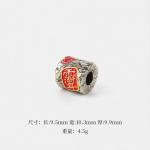
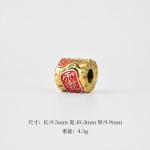
The barrel form is simple: a cylinder, flat at both ends, drilled through. Its virtue as a spacer is that it neither rolls nor turns, and set among round beads it does not push its neighbours out of line. The proportion of length to diameter has to look right; too long and it reads as a length of pipe, too short and it becomes a thick disc. The end faces have to be flat, because flat is what sits against the neighbouring bead; one face cut at an angle and the whole strand comes out crooked. The hole must be straight: drilled from both ends it often misses the meeting point, and the cord jams halfway through.
The two colours, yellow and white, are about pairing. The yellow is close to old copper and goes with jujube wood, walnut, dark bodhi seed; the white is cold and looks clean with silver, lapis, a pale cord. One is enough on a strand; two, one on each side, reads as deliberate, like something arranged to be seen. Hole size has to match the cord: a large hole on a thin cord and the bead shifts, a small hole forced onto a thick cord and the cord frays first. The two colours are a surface treatment on white copper, not gold plating — worn through, nothing different shows underneath.
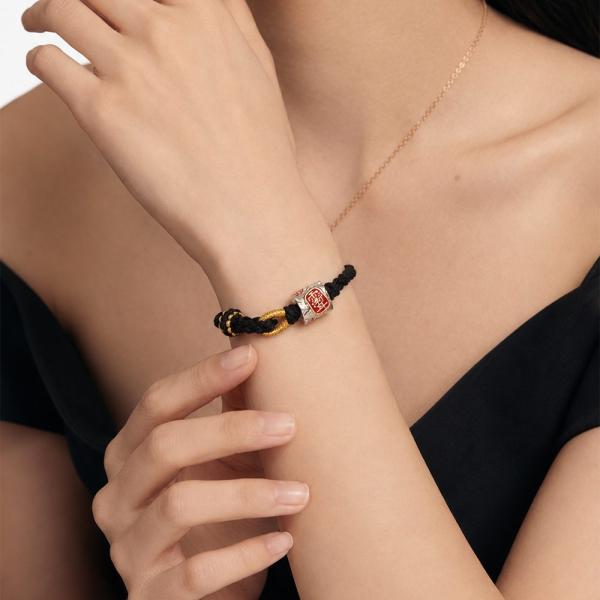
There is an old rule about these name characters: do not wear one below the waist. Those who hold with it put it at the neck or the wrist and never make it into a waist chain. Those who do not can read it as a rare piece of lettering; on a plain strand it stands out well. Some use it as the top bead, some as a spacer between others — different positions, different conventions — and trying it once tells you which looks right. A pair has been made into earrings too, one yellow and one white; unusual, and it works.