


Menu
By theme
By theme

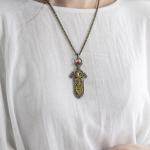
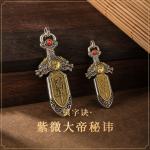
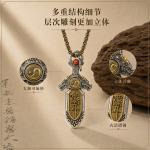
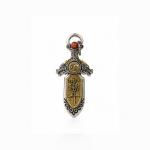
{{ variable.name }} : {{ variable.values[selectedVariantsIndex[variable_index]].name }}
Quantity:
The paired-fish pattern is far older than the taiji diagram. Han bronze basins carry two fish swimming side by side on the base, Song porcelain dishes carry more of them, and the motif runs all the way down to wooden wash tubs and quilt covers. Fish sounds like “surplus”, so two fish are “double surplus”, and the painter needs no caption because the viewer supplies the auspicious phrase. It appears most often on objects made for marriages. By the Qing the drawing had grown finer — the tail split into three, the fins openwork.
This piece sets the two fish in the taiji position: one facing up, one down, head to tail, an S of empty space between them. The yin-yang reading was attached later, but once the shape is set this way the eye goes there by itself. Shift the placement by half a finger and the whole plaque loses its tension, so the mold is laid out with dividers before the graver goes in. The two bodies must be the same length; long against short becomes one chasing the other, not one meeting the other.
In relief on a round plaque, the curve of the fish has to follow the surface. The scales cannot be cut one by one all over — dense to the point of a blur at arm’s length — so leave a smooth patch every few, and light will do the swimming. The eye is where the piece comes alive: too deep and it glares, too shallow and it is dull, so the carver usually leaves the pupil a half-sphere and lets the highlight work, which wears better than an incised ring. The water ripples at the rim should not run all the way round; leave two breaks and the fish are in water.
Large and small differ by more than size. The larger face has room to spread the fish and space for detail; the small one can only hold the outline, with scales and fins simplified. Men take the large more often and women the small, and the reverse happens too — a big frame in a small plaque looks cramped, a slight frame cannot carry a big plaque, and trying both settles it. Choose a thin waxed cord; a thick one cannot carry a plaque this delicate and makes it look smaller than it is.
The name character above is the secret writing of Ziwei, and paired with the two fish one governs heaven and the other water, a combination folk taste likes. “Surplus every year” is the safest thing to say when giving one, and there is no need to go deeper. Some say the paired fish is a Daoist ritual object; that is not untrue, but what hangs at the neck is an ornament, so do not raise it too high — raised too high it becomes hard to sell. Put a small card in the box showing how the name character is read, so the recipient does not get it wrong.