


Menu
By theme
By theme


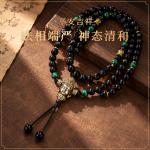
{{ variable.name }} : {{ variable.values[selectedVariantsIndex[variable_index]].name }}
Quantity:
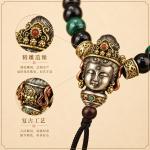
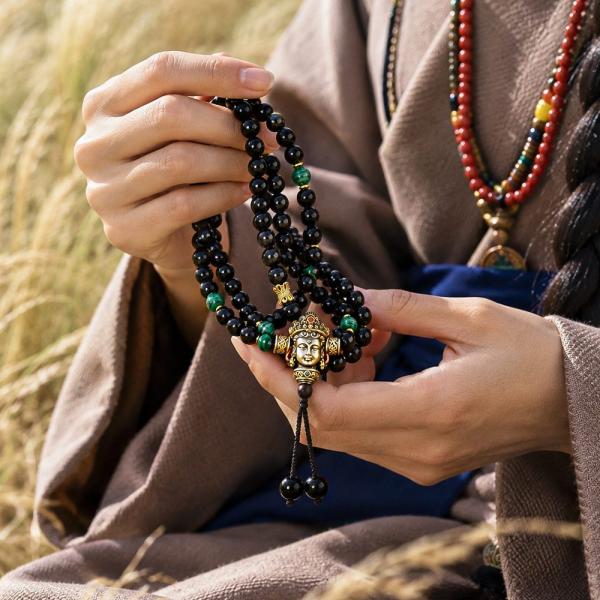
The three-hole bead is the piece that closes a strand: three holes, one out each side and one upward to take the guru bead and the knot. It is also called the Buddha head. The balance of the whole strand rests on it, and if the holes sit off-centre the strand runs crooked and always seems to lean to one side on the wrist. With the holes true, the strand settles by itself. If the meeting point of the three holes is left with a burr, the cord is cut through inside it, and the damage is in the one place you cannot see.
Dashizhi, the Bodhisattva of Great Strength, is one of the Three Saints of the West, standing opposite Guanyin on either side of Amitabha. His mark is the treasure bottle on his crown, and what it holds is the light of wisdom, not water. The pure bottle in Guanyin’s hand is the one with water in it; the two get confused, and one sentence at the counter sorts it out. Identify the figure by the bottle first and the hand gesture second, and you will not go wrong. Seated, with both hands in a gesture on the knees and the bottle above the head, he fits into a small space more easily than a standing Guanyin.
Worked on a three-hole bead, the figure can only take one face; the other two belong to the holes. That is why the figure is usually half-length or seated — a standing one will not fit. White copper holds the fine detail, but the polishing has to go around the holes, and the rims must be rounded over, or the cord is cut and a new one frays within a fortnight. The folds of the robe should gather toward the line of the hole; folds that turn hard leave gas pockets in the casting.
Matching a three-hole bead means matching the strand. Large main beads want a large one, or the strand is top-light; small main beads with a large one look like a bell hung on a string. Hole size has to suit the cord: a large hole and a thin cord and the bead shifts about. The small bead underneath is the guru bead, and with it in place the knot does not rub directly on the hole rim. When you change the three-hole bead, change the cord at the same time; an old cord has damage you cannot see and will break just the same against a new bead.
In folk reputation Dashizhi is less famous than Guanyin, but in Pure Land images he is never absent. People buy this piece mostly when they already have a strand and want a new closure; few are bought as gifts, most for the buyer’s own use. When someone asks why not Guanyin, the answer “he is the one this set is missing” saves a long account of origins. On a Tibetan-style strand a turquoise or southern red agate is often added below the three-hole bead, a colour strong enough to hold its own against white copper.