


Menu
By theme
By theme

{{ variable.name }} : {{ variable.values[selectedVariantsIndex[variable_index]].name }}
Quantity:
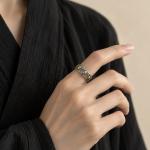
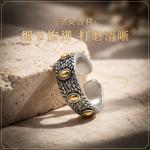
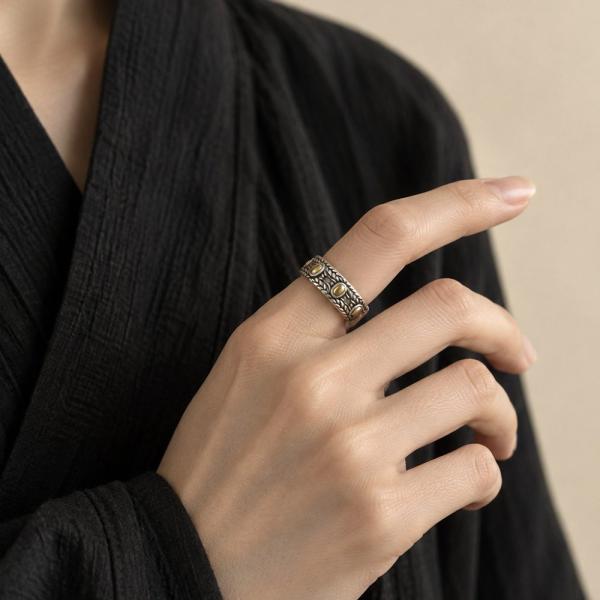
Seven grains of rice is a name most younger customers have never heard. The old people said that when you travelled, you sewed seven grains into the corner of your coat — a thought for your next meal, kept on you. Believe it or not, the seven grains on the ring are really there, set in a row around the band. Nobody buys it expecting much; they buy it because the saying sounds solid. Some say it is just a memory of poverty passed down, and they are not wrong.
This one is copper, not white copper. Copper runs red-yellow and is almost too bright when new; worn for a while it settles into the colour of old metal. Copper picks up a smell from sweat — that is the metal itself, and washing clears it. If that bothers you, take one of the white copper pieces instead: cooler in colour, no smell. Copper is soft, so a knock leaves a small dent. Not deep, but it remembers. Worn long enough, copper takes on a patina, and that is where it outlasts anything plated.
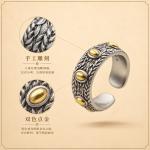
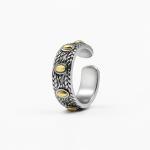
Seven grains in a row, each overlapping the next, a thin gap between them. A grain should be full-bodied with slightly tapered ends; too round and it becomes a bead, too pointed and it looks like a nail. Dirt collects in the gaps, and the antiquing leaves the dark down in the bottom of them, which wears better and saves you picking at it. The row is not a perfect circle — the grains crowd a little near the opening. Every open ring does that, and once it is on you cannot see it. Count them: seven is seven.
Open means open: pull the two ends apart and the size adjusts. The advantage is that nobody has to know their ring size — try it on the finger and pinch. The disadvantage is metal fatigue. Bend copper at the same point often enough and it will break. Set it once and leave it, and wear it as a closed band. Dry your hands after washing; do not leave water sitting between the fingers. Copper hates lasting damp, and a green film will start on the inside. Wipe that with a soft cloth, never soak it in anything acid or alkaline. Dry before you put it back on — trapped moisture does the most damage.
Which hand to wear it on has a heap of folk rules, and they differ from place to place, so do not take them seriously. Practically: if you write or type all day, the right hand will catch on things, and the left is easier. Run a finger round the inside of the band; if there is a burr, smooth it with fine paper or it will rub the skin. The work on this piece is all in the grains — everywhere else is plain — so look at whether the seven sit evenly, whether they match in size, whether the gaps stay constant. The tips should be rounded. Sharp tips catch on knitwear.