


Menu
By theme
By theme


{{ variable.name }} : {{ variable.values[selectedVariantsIndex[variable_index]].name }}
Quantity:
A charm coin is not money. It never circulated; it was cast to be hung up or kept at the bottom of a box. The mountain-ghost coin is among the better known of them: a ring of characters on the face, bagua or a thunder command on the back, written in talisman script rather than regular hand — try to read it as ordinary characters and you will not get a single one. That unreadability is part of the object. Plenty of people are put off by it, having missed the point that it was never meant to be read. A spell cut into a plaque was not meant for outsiders either.
The two characters for mountain ghost come from the Nine Songs in the Songs of Chu, where they name a sacrificial hymn. Daoism later moved the name onto a coin face, added a spell, and made it an object for warding off evil. Centuries lie between the two, so do not fold them into one story; told apart, the account is more convincing. Some assume it is a reign-title coin from one dynasty or another, and that misunderstanding has to be cleared first: reign-title coins were spent, this one is hung. Mix the two and anyone who knows the field will hear that you are bluffing.
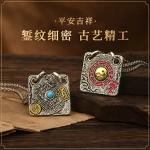
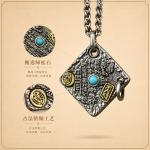
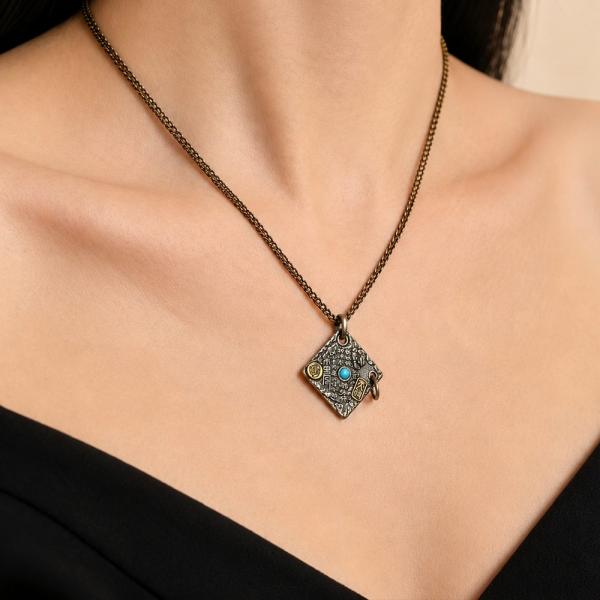
The plaque is a single-faced plate, not a coin blank. A thin wall rises at the rim, the characters sit inside it, and a finger passes over without snagging. Cast white copper holds the walls of a cut; depth is fixed in the mould, and finishing can only clean it up, never add. The back is plain, which polishes well and leaves room for a name to be cut later. The spacing between characters has to be even — crowd them and the face reads as a mess, which is where you judge the work. On a plain-backed plaque, tilt it under a lamp and the quality of the polishing shows at once.
The plaque comes without a chain; you match one yourself. Waxed cord is the safest choice, leather next, and if you want metal, pick something fine — a heavy chain overwhelms the proportions of a small plaque. The ring sits at the top and the hole is not large, so singe the end of the cord before threading it. The plaque is light and does not knock against the chest as you walk, which is easier than a thick one. The hole is set slightly back, so the face turns outward on its own and you are not forever reaching to straighten it. Keep the knot small and tuck it into the hole where it cannot be seen.
With pieces like this, what matters is being able to give a clear account of where they come from. If a customer asks whether it works, say it is a piece of folk custom and that people wear it for peace of mind; that is enough, and there is no need to add. White copper dislikes sulphur, so keep it away from rubber bands and out of camphor chests — sulphur turns it black in a layer that will not wipe off. If it does go black, do not reach for sandpaper. Sandpaper takes the edges off the cuts, and the age in the piece goes with them. To clean it properly, wipe once with a soft cloth and clean water, let it dry, then put it away.