


Menu
By theme
By theme

{{ variable.name }} : {{ variable.values[selectedVariantsIndex[variable_index]].name }}
Quantity:
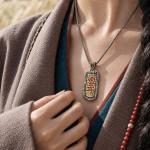
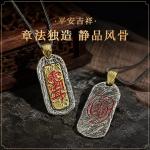
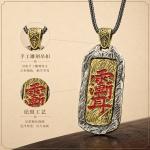
A wushi plaque is meant to stay plain: no carving, no lettering, peace and nothing amiss. This one breaks the rule with a Ziwei taboo character on the face. So it is half a wushi plaque — the form is right, the treatment is not. Anyone who knows sees it immediately; anyone who does not simply finds the plaque clean. Neither reading is wrong. Plainness wears well, but a character gives people something to talk about and something to ask about. Old-school collectors will not take a modified piece; players like them. Both have their reasons.
The Ziwei taboo character is the one Daoism uses for the Emperor of the Purple Star. Its strokes are stacked densely, and folk telling has it built from twenty-eight strokes to answer the twenty-eight lunar mansions. The idea travels widely, yet the stroke count differs from one carving to the next, so do not use it as a ruler against somebody else’s piece. If you hold with the story, then twenty-eight it is. The character needs a margin around it; strokes driven to the edge stifle it, and it loses all room to breathe.
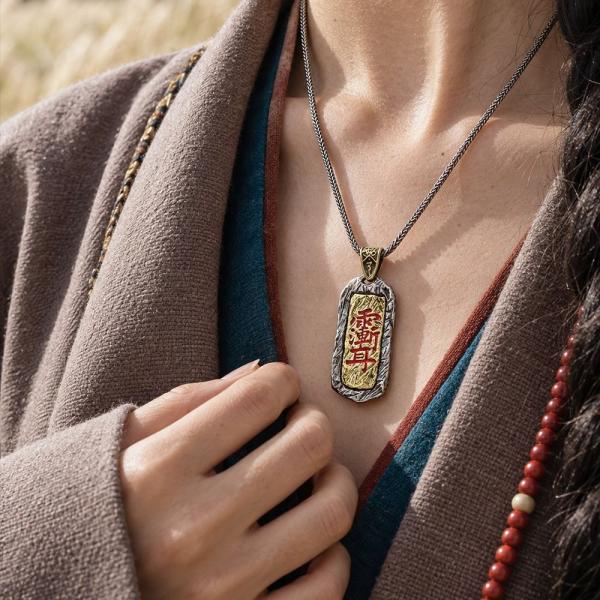
The plaque is rectangular with rounded corners and a narrow border raised at the edge. A narrow border makes the character look larger; widen it and the centre goes empty. Antiquing leaves the dark in the strokes and keeps the face bright — light against dark lifts the character off the surface without needing a close look. The cuts should not go too deep: deep reads as a stele, shallow will not hold the colour. Border lines must be straight, and hand finishing rounds them at the corners more often than not; once rounded they lose their spine. The line of a narrow border has to be even. Wide on one side and narrow on the other and the plaque looks crooked, which shows when it is worn.
The weight of a wushi plaque is in its emptiness. Cutting a character takes some of that away, which is why this piece is kept small; any larger and it looks like a spirit tablet. Worn at the chest, the face lies against the skin, and in winter a high collar pushes it up — the common lot of square plaques, and there is no avoiding it. It is thin enough to tuck inside a collar and disappear, which is convenient when you are out dealing with people. The corners are rounded so they do not catch cloth. Square corners look better and are misery under a sweater; that is the trade.
When giving one, tell the whole of it: the form is a wushi plaque, the character is the Ziwei taboo name, both are old, and putting them together is a later habit. Someone who likes things spare may not want a character on it, so ask first. Oxidised white copper turns warm and sits better against dark clothing; on a pale shirt it looks heavy. Put a sheet in the box saying how the character is read and what it means, so the person receiving it does not have to guess, or ask the wrong person.