


Menu
By theme
By theme



{{ variable.name }} : {{ variable.values[selectedVariantsIndex[variable_index]].name }}
Quantity:
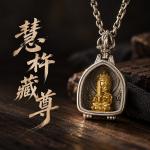
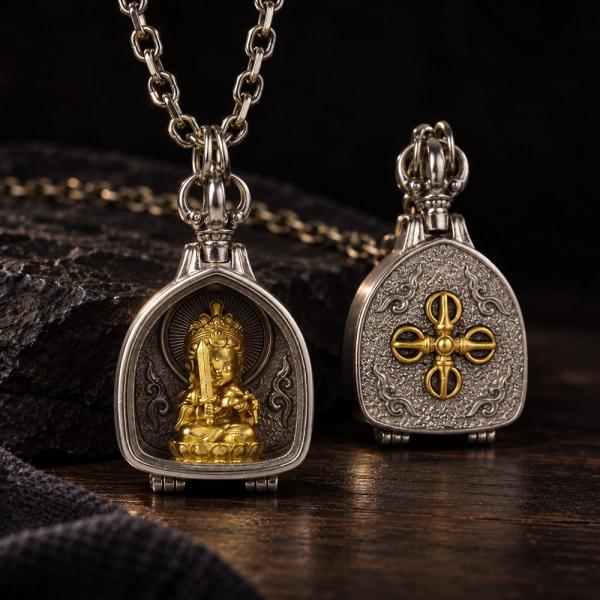
The name Hui Chu Zang Zun is not a standard title, and you may not find it even by working through catalogues of iconography; the shop has kept an older name. Two layers can be read from the characters: hui, wisdom; chu, the vajra; zang zun, a figure from the Tibetan system. The name should not be treated as scholarship, and it is enough to know that it puts wisdom and the ritual implement together. It is a long name and awkward to say, so many people simply call it the Tibetan figure. The names vary; the object is the same.
The vajra stands for indestructibility and the sword for cutting through, and the two often appear together in Tibetan iconography. Manjushri holds the sword, while the vajra is more usually a general ritual implement; setting the vajra beside wisdom points to upholding wisdom by unbreakable strength. In folk jewellery the combination is simplified into a single symbol, and explaining it in detail only loses the audience. The middle of a vajra is the grip and the ends are the prongs, which come in single, three and five.
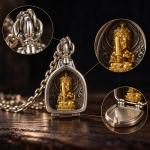
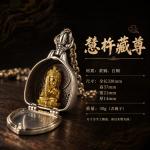
Tibetan figures carry more detail than Chinese ones: crowns, necklaces and armlets layer over one another. Shrunk to pendant size those layers crowd together, and poor work blurs into a mass. With a Tibetan piece, look first at whether the crown has any layering, then at whether the implements in the hands are distinct; once those two pass, most of the rest will. If the crown has been reduced to a single ring, the mould has already been simplified. If the implements are a blur, no amount of fine detail elsewhere will save it.
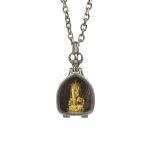
White copper is the sound choice here: hard enough to keep fine lines, and not so costly that the price climbs. Once oxidised it turns grey overall, and the black in the recesses against the bright faces gives more contrast, which makes it look more like an old piece. Anyone who wants the bright surface will have to polish often, but polishing too hard takes the aged layer with it, and that balance is a matter for you. When it arrives, check the hole first, because a burr at the mouth will cut through a cord in no time.
Wearing it needs no particular ceremony; a short chain or a leather cord both work. Leather suits the Tibetan subject better, in dark brown or black rather than anything bright. If the back is engraved, it will feel slightly abrasive against the chest, and sensitive wearers should move it outside the clothing. Tie the knot of a leather cord behind the pendant, not in front. A short chain reads more literary, a leather cord more rugged.