


Menu
By theme
By theme


{{ variable.name }} : {{ variable.values[selectedVariantsIndex[variable_index]].name }}
Quantity:
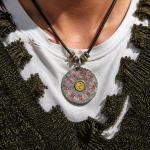
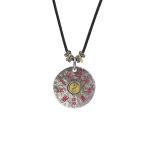
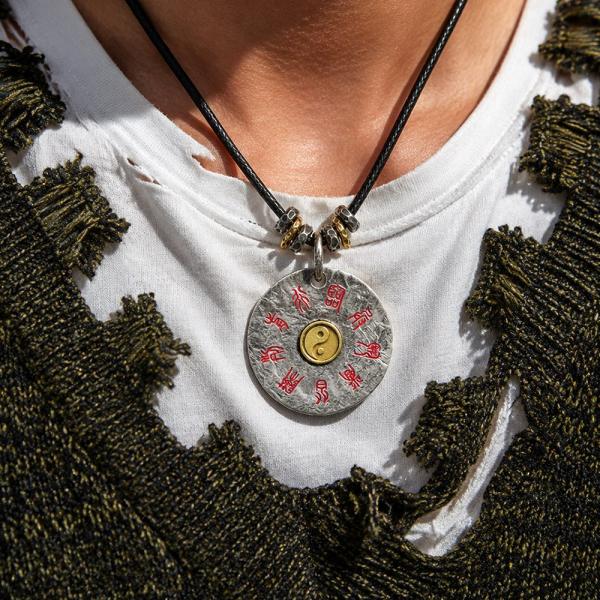
The taiji diagram is hard to do in metal. Two fish, one raised and one sunk, with the S between them cut in a single run — break it once and the figure falls apart. Antiquing helps: the sunken fish keeps the dark, the raised one is polished bright, and yin and yang separate without any colour being added. The start and end of the S have to meet. Offset by half a millimetre and the fish become two tadpoles. The eyes have to be kept. Without them the thing reads as two cakes rather than taiji, and that is visible at a glance.
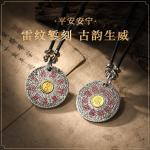
The Thunder Patriarch’s character sits above the taiji, taking little room. The character is dense and the taiji open; dense against open keeps the face from going flat. A narrow wall rises at the rim of the round plaque and the field inside is matte. Matte does not throw back light, so the outlines of figure and character read more clearly. Polish the whole face bright and under a lamp there is nothing to see but a disc of white. If the back is plain, a name can be cut into it. Think it through first; a bad cut cannot be undone.
In casting white copper pieces with relief on both faces, the thickness has to stay even or the metal curls to one side as it cools. A warped plaque rocks on a table, which anyone can see. Test it by laying the plaque face down on glass and pressing a corner: if it tips, it is warped. A slight warp may be pressed back by clothing over time; a bad one never comes flat. Cast pieces carry a few blowholes. Those hidden inside the rim wall do not matter; one on the back of a fish should be sorted out.
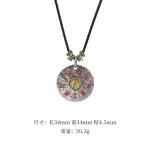
Plaque only, no chain. The hole is at the top, and once it is on a cord the plaque turns, so the taiji has no fixed orientation. Purists mind that, but worn and walking about, it has been round every orientation anyway, so it is not worth insisting on. To hold it still, slip a short piece of leather tubing through the hole; with enough friction it stops turning. Cut the tubing square — a protruding end looks bad. It hardens with age, and then you replace it. A short length costs almost nothing; do not enlarge the hole for its sake.
Taiji and the Thunder Patriarch are both Daoist signs, and putting the two on one plaque is common practice at folk level; do not insist it is the rule of some school. The aged colour on white copper shifts with sweat — a summer deepens it by a shade and it does not wipe back, nor does it look bad. Some customers pick the darkest, saying that is what an old piece looks like. In the box, keep it from lying under other metal: the raised face of the taiji wears flat first, and flat leaves you with a plain circle.