


Menu
By theme
By theme



{{ variable.name }} : {{ variable.values[selectedVariantsIndex[variable_index]].name }}
Quantity:
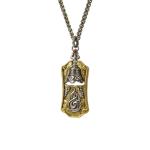
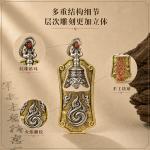
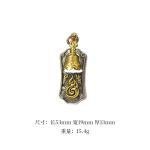
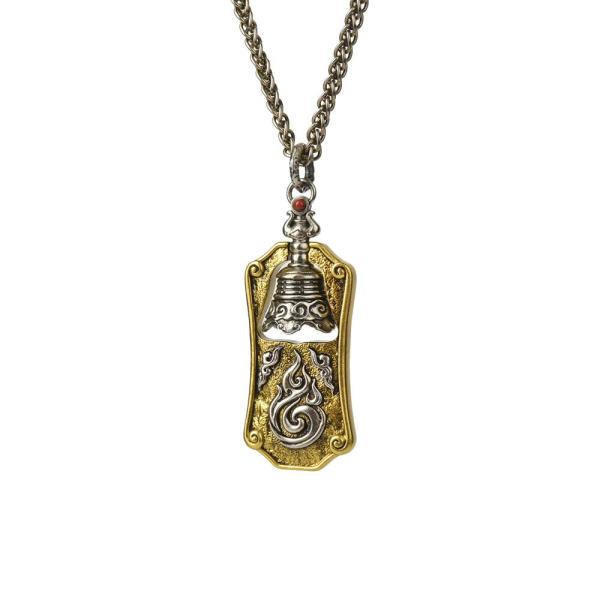
The Three Pure Ones bell is a Daoist ritual instrument: the handle forks into three prongs standing for the Three Pure Ones, and the body carries cloud pattern. Made into a plaque, the bell is flattened and the three parts — handle, body, mouth — still have to read. What is lost most easily in flattening is the flare of the mouth. Make it flat and you have a square of metal with pattern on it, and the bell is gone. The tips of the three prongs must be level. Uneven lengths scatter the meaning and look wrong besides.
The lettering on the bell body has to be small and has to follow the curve. The silver version sits close to the natural colour of white copper, so the characters are brought out by antiquing; the gold version has a warm ground and needs deeper cuts to hold against it. The difference in work between the two is at this step, and it is not simply a change of colour. Cut the gold too shallow and from a distance there is a field of yellow with the characters smothered inside it. The thickness at the mouth must be even. Thick on one side and thin on the other shows as a tilt once the piece is flattened, and the plaque will not sit square.
In ritual the bell signals: one shake, and beginning and end are both accounted for. Carried onto a plaque, the idea is a reminder that things want an opening and a close, and there is no need to bend it towards drawing wealth. The words in a design’s name are a label, not a guarantee; saying so plainly prevents arguments later. With a customer who comes for the label, keep label and workmanship in separate sentences. Shaking the bell closes a rite; a plaque cannot be shaken, so the gesture stays in the form, and whoever understands will understand. Label is label and work is work. Keep them apart and the customer trusts you more.
The plaque is long in shape and hangs at the chest like a small tablet, without the bulk of a bell. A cord suits it better than a chain, and the cord should be dark so the plaque stands out. The hole is at the end of the handle; on a cord the plaque turns sideways and rights itself after a couple of steps. Keep the knot small and tuck it into the fork of the handle where the join cannot be seen — that is the craft of how it is tied. Dark brown or navy works. A pale cord against the silver version clashes and makes the whole thing look light, without weight.
The silver is understated, the gold catches the eye; for a gift, look at what the person usually wears. The gold on white copper sits on the surface, and long wear fades the corners first. Every coloured piece does this, and saying so beforehand beats explaining afterwards. If the back is plain it can be taken away for lettering. Think it through first; a bad cut cannot be repaired. Put a card in the box saying what a Three Pure Ones bell is — worth ten spoken explanations and saves repeating yourself.