


Menu
By theme
By theme

{{ variable.name }} : {{ variable.values[selectedVariantsIndex[variable_index]].name }}
Quantity:
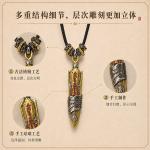
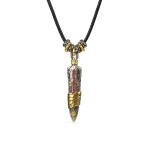
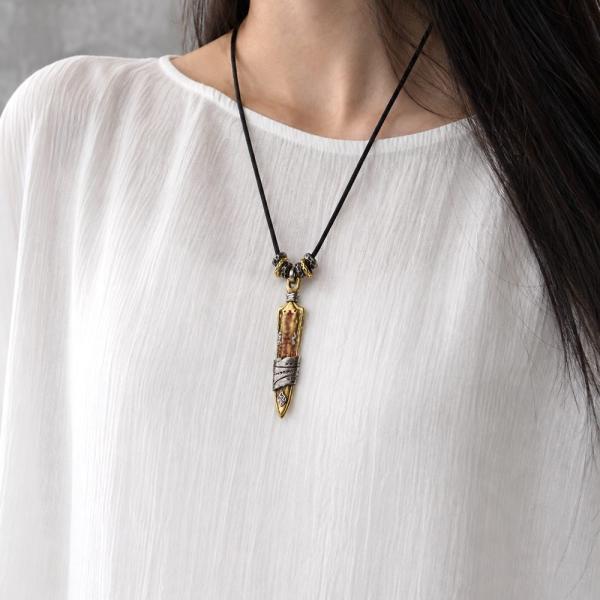
In Daoism the sword is a ritual blade, not a weapon. A sword drawn on a talisman carries the idea of cutting, of severing — one stroke and no going back. The sword-talisman pendant puts the two together on one plaque: the shape is a sword, the writing is a talisman. The characters usually sit at the middle of the blade, strokes running with the ridge so they read as a mark along the steel. Leave a hairline of space between characters and ridge; press them close and the edge swallows them and the strokes are lost. The face is only so wide. Cut a fuller down the middle and there is nowhere for the characters, so the fuller is usually given up for the writing.
On a sword-shaped piece the ridge line matters most. The centre has to be straight and the bevels either side even, so that with light coming from the side an unbroken bright line runs along the ridge; then the work is right. Let the ridge wander and the whole sword goes limp. White copper is hard enough that a long slender casting does not bend, which is where it beats pure copper — poured long, pure copper always warps. The angle where the bevels meet should be keen. Keen and it catches light; rounded and it is a dead white field, and the blade has no edge.
The guard is the thinnest section and the likeliest to run short of metal. Hold it to the light and check both sides of the guard for shrinkage. Antiquing keeps the dark in the ridge groove and the cuts, and leaves the edge bright — bright against dark is what makes an edge look thin. Darken the lot and it is a strip of iron with no edge to see. The guard should not exceed a third of the blade’s width. Wider and the head grows heavy, the sword looks short, and the proportions come apart.
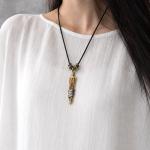
The weight sits in the lower half, so it hangs vertically and does not swing across. The hole is at the top of the grip, and the knot must be small; a large one covers the handle. In winter the point catches on knitwear, so settle it before you go out, or tuck the plaque inside a collar. The back is flat and comfortable against the chest, though the point still presses a little. Under thin summer clothing it makes a visible spot; if that bothers you, take a shorter cord and let the plaque sit above the collarbone.
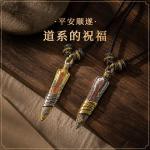
The sword talisman is a colder subject than the wealth gods: fewer ask, and those who buy usually know what they want. There is no need to invent a story for it; the shape and the workmanship are enough. On the gold version the colour is on the surface, and a narrow face like the blade wears quickly, so fading is normal. The silver version warms as it ages while the bright line on the blade remains, which makes it look more like something that has been used. Some people use one as a bookmark. Between the pages white copper will press a mark into the paper. That cannot be prevented, only mentioned.