


Menu
By theme
By theme




{{ variable.name }} : {{ variable.values[selectedVariantsIndex[variable_index]].name }}
Quantity:
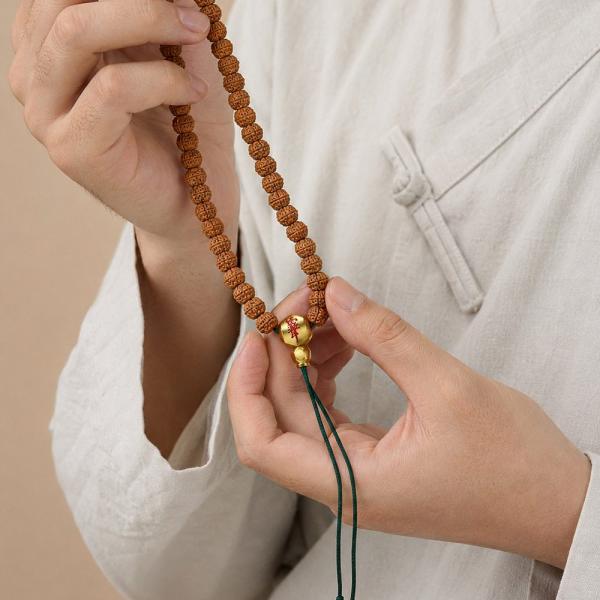
A guru bead is the joint of a bead bracelet. Three strands meet there: one coming in, one going out, one dropping down to carry a small bead or a charm. So it needs three holes — two straight through, one drilled from the top to meet the cross hole. Drill them off centre and the whole bracelet strings up crooked, and no amount of adjusting will fix it. The bores have to be straight. On a slant the cord runs at an angle inside, the beads sit twisted, and no length of stringing will straighten them.
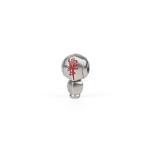
On a gourd-shaped one, small above and wide below, the cross hole goes through the lower bulb and the vertical hole comes down through the upper. Both mouths need chamfering; chamfer one side only and the other still cuts the cord. White copper is cast and then drilled, and the mouths must be broken so the cord can turn inside without being sawn. The chamfer need not be large: a visible ring of bevel is enough. The waist can be drilled too, but the bore is short and thick cord is a struggle to thread, so it is rarely done, and rarely bought when it is.
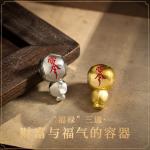
There are gold and silver versions, and they take different beads. Dark wood and seed beads warm to the gold; cool stones like lapis and turquoise sit right with the silver. If you cannot decide, bring the beads in and lay them together, which is more reliable than thinking it over under a lamp. Shop lighting runs yellow and everything looks passable under it; outdoors it gives you away. Gold also works with warm materials like amber and beeswax, while silver jumps against southern red agate. Colour is something you try.
A guru bead runs one size larger than the others, and the rhythm of the whole bracelet is settled there. Too big and the top grows heavy; too small and it cannot hold the string together. Spacing has to be worked out as well: the distance from the cross hole to the next bead sets how long the hanging section will be. Long and it swings, short and it bunches. There is no fixed figure; it depends on bead diameter and the wearer’s wrist. What hangs below differs by maker — small plaques mostly, tassels rarely, since tassels tangle. Settle the spacing before drilling. Drill wrong and the piece is scrap, fit only to go back in the crucible.
Parts like this are not about meaning; they are about fitting. If a hole has a burr, roll a slip of fine paper into a tube and turn it twice through — do not scrape with a knife. White copper rubbing against wooden beads over time leaves a grey film, which wipes off once the bracelet is taken apart and does not affect the beads. If the white copper is too bright for you, rub it on an old cloth for a few days and the shine settles. When you take a bracelet apart, keep the order: the beads are graded by size, and once mixed they have to be sorted again, which costs time and cord.