


Menu
By theme
By theme

{{ variable.name }} : {{ variable.values[selectedVariantsIndex[variable_index]].name }}
Quantity:
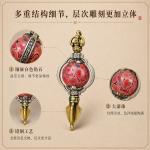
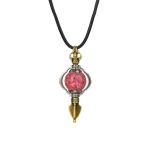
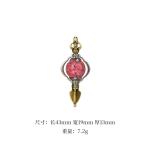
The Sanskrit vajra was originally the weapon in the hand of the Indian thunder god, and Buddhism took it over to stand for firmness and wisdom. The number of prongs matters: one, three, five and nine are all made, and each means something different. From a photograph this piece will not tell you how many; you need it in hand. The middle is waisted and the ends flare, which is the commonest form. In Tibetan practice the vajra pairs with the bell, the vajra for method and the bell for wisdom.
Ageing is not the same thing as dirtying. An acid bath bites the surface, dark stays in the hollows, then a cloth wheel brings the highs back up, and that break between light and dark is what reads as years. Bite too long and the copper goes grey, and no amount of polishing brings it back. An aged piece hates sweat; worn against skin in summer it mottles within days. Once mottled, the only cure is a redo, since scrubbing at it yourself only takes the brightness off. Concentration and timing come from experience, and one batch can still vary, which counts as the mark of handwork.
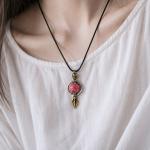
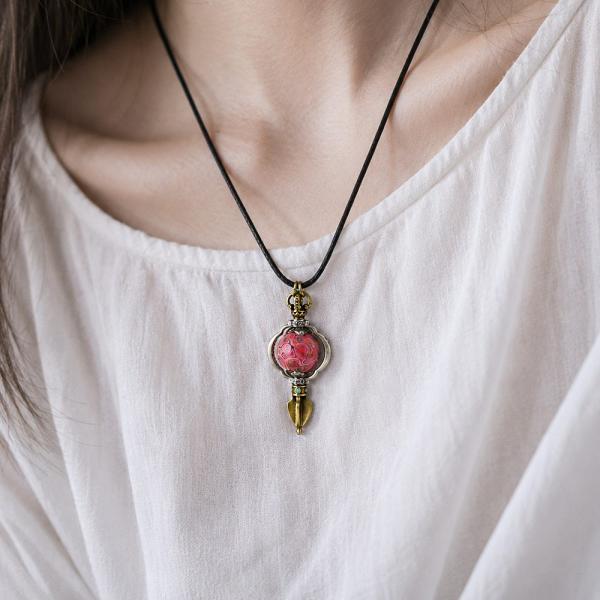
The two ways to wear it do different jobs. A sandalwood cord is dark, continues the aged brown-black, and can be adjusted for length. The pendant on its own suits someone who already owns a chain: cheaper, and they can match the weight themselves. Knot the cord double, because a single knot loosens with sweat. Sandalwood cord dislikes water, so push it up the wrist before washing rather than letting it soak. Singe and twist the cut end or it unravels. Keep the chain fine: an aged vajra has weight, and a heavy chain looks coarse rather than carrying it.
The shape is long, and it hangs better vertically than across. Point down is the usual way; point up is not forbidden, and comes down to habit. An aged surface marks easily, so keep it away from keys and zips; once a patch is rubbed off it cannot be restored. If you walk a lot, shorten the drop so it doesn’t strike the hip bone. The vajra has edges and will wear at clothing against the skin, so a layer in between is best. Take it off to shower; moisture works into the seams and the aged colour shifts.
A ritual implement was not originally jewellery, and wearing one is a matter of the last few decades. The shop sells it as a motif, not as a ritual object. What a customer wants is the shape, and explaining the source lasts longer than inventing a story. Asked whether it wards off evil, "that is what folk custom says" goes far enough; there is no need to shut the door. In thangkas the vajra is an attribute in a bodhisattva’s hand, not something carried on the body, and that distinction is worth making.