


Menu
By theme
By theme






{{ variable.name }} : {{ variable.values[selectedVariantsIndex[variable_index]].name }}
Quantity:
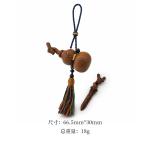
The storage charm is hollow, either unscrewed at the middle or push-fitted, and the belly holds something the size of a fingertip. What goes in is up to the owner: a folded note, incense pellets, a few grains of rice. The thread at the mouth has to run clean or it grinds, and once a copper thread is burred it goes back to the works. Line the thread up before turning, because forcing it strips it, and one strip finishes the piece. The wall is thin, so hold it by the waist rather than the middle of the belly. Don’t fill it right up; leave a little air, or it fights you as you close it.
The gourd carries three layers of meaning. One is sound, since hulu echoes fulu, fortune and emolument. One is shape: a narrow mouth and a broad belly that holds things. The third comes from the tales of the immortals. Hu Gong sold medicine, and when the market closed he jumped into his gourd, which is why practising medicine is still called hanging out the gourd. Of the three, the shape is the solid one and the rest is later embroidery. Gourd vine runs long, and old paintings show a whole string of them for unbroken descendants.
The dragon head is cast, and the two horns are the thinnest part; drop it and they go first. When buying, check the root of each horn and set aside any with sand holes. The line of the dragon’s mouth runs into the waist of the gourd, and a poor join looks like a patch stuck on. Scales are pressed in one direction, and reverse one and the pattern goes chaotic. Head up is standard; head down is also made, depending on where it hangs. Repaired horn roots run darker, which the ageing hides.
People hang these on bags, by the bed and in cars. In a car, don’t choose a heavy one, because it swings under braking and knocks the glass. A leather cord holds better than a metal chain, which works itself open on a rough road. On a bag, take the small size; a large one trailing at the zip rattles as you walk. By the bed, keep it off the wall, or a turn at night knocks out a sound. Change the cord every six months, since the wear is invisible until it goes.
A hollow piece dislikes damp. In the rainy season the belly condenses and paper inside goes mouldy, so open it and let it air now and then. Don’t oil the copper mouth; oil collects dust and the more you apply the blacker it gets. Hold the waist when wiping, never the mouth, which is the thinnest part. Dust collects at the joint between head and gourd, and a soft brush run along the seam clears it. When it is not hanging, empty the belly and store it open so the smell of copper can escape. Copper keeps indefinitely; what it dislikes is being sealed in a plastic bag.