


Menu
By theme
By theme


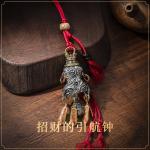
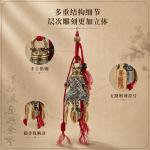
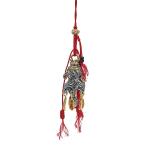
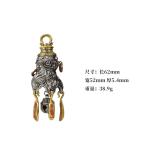

{{ variable.name }} : {{ variable.values[selectedVariantsIndex[variable_index]].name }}
Quantity:
In Buddhism the bell is an offering vessel, and sound counts as an offering. Tibetan practice has the vajra bell, usually paired with the vajra itself: the bell for wisdom, the vajra for method. The wind bells under Chinese monastery eaves come from another line entirely and are there for a clear sound. Bell bodies usually carry a lotus, upright or inverted, and a ring of petals at the mouth is common. The clapper may be copper or wood; wood is muffled, copper bright. Old bells have their clappers replaced, since the cord wearing through is routine.
Copper inlay means setting copper sheet or wire into a groove cut in cupronickel, hammering it tight, then grinding it flush. The two colours are close, and only the light shows the difference, so what makes it work is how tightly it is set by hand. Set loosely, it lifts during grinding and leaves an open seam. The groove is cut slightly narrower than the inlay so that the hammering bites. After setting it rests a day so the metal settles, since grinding too soon lifts the edges. Grinding is followed by polishing, and polishing too far brightens inlay and ground together until the boundary disappears.
The five wealth deities are arranged around the body of the bell, five faces crowded onto a curved surface, so brows and eyes have to be offset or they read as one mass from a distance. The mouth of the bell should be thick; thin sounds shrill and takes knocks badly. The clapper is fitted separately and can be changed when the cord wears through. The loop at the top carries the weight, and brazed thin it opens with long hanging. The five are cut around the curve so that you must turn the bell to see them all, which is deliberate rather than a shortage of space.
It can hang on a bag, behind a door, or in a car. Behind a door, keep it off the panel or it rings all night in the wind. In a car, take the small one, with a duller note that doesn’t annoy. On a bag, tie it securely, because if the bell drops you won’t hear it. Some hang one in the entry so that the door announces them. Use a waxed cord and knot it twice, since the bell has weight and a single knot won’t hold. Keep it away from keys, because the inlay grooves mark easily.
This is not a ritual-grade bell and its voice doesn’t carry far, so don’t expect it to. What the customer is buying is the inlay work, and explaining material and method is more use than any claim about efficacy. Bright-finished examples show fingerprints badly. Hanging for a long time, dust collects in the seams; don’t rinse it, because water inside the chamber is slow to dry. Shake it and listen: a scattered sound is wrong and a muffled one is right. On aged versions the body stays black, and you wipe only the raised lotus petals.