


Menu
By theme
By theme

{{ variable.name }} : {{ variable.values[selectedVariantsIndex[variable_index]].name }}
Quantity:
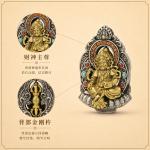
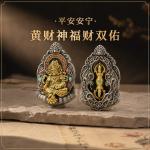
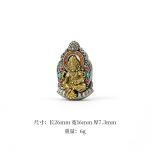
Yellow Jambhala is one of the five Jambhalas, yellow in body, which is where the name comes from. The usual form holds a mongoose in the left hand and a wish-fulfilling jewel in the right, seated in a half lotus, with a round belly. In Tibetan practice his department is not windfall wealth but the resources that support practice. The five are red, yellow, white, black and green, each with a role, and Yellow sits at the centre. What the mongoose disgorges is treasure rather than coins, a detail that is often painted wrong.
Ageing concentrates on the robes and the lotus base. Dark brown stays in the hollows, the face is polished, and the eyes and brows come clear. An aged piece must not be scrubbed with toothpaste: the abrasive is too coarse and the boundary between light and dark goes. After the acid bath it has to be neutralised thoroughly, since residue in the seams turns green later. Greened pieces can’t be cleaned, only redone. Depth varies from batch to batch and within a batch, which counts as the mark of handwork.
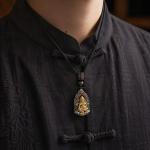
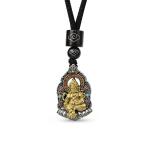
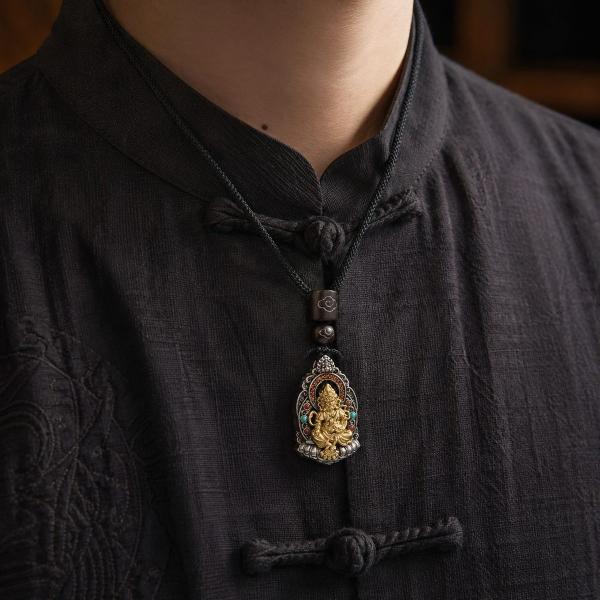
The two ways to wear it differ in the cord. A sandalwood cord is dark, continues the aged brown, adjusts for length and is easy to replace if it breaks. The pendant alone suits someone who already has a chain, though silver reads cold against it and leather sits better. Sandalwood cord dislikes water, so push it up before washing rather than soaking it. Singe the cut end and twist it or it unravels. Knot twice: a single knot slips with sweat, and a slipped knot loses the pendant. Change the cord every six months, or when the colour goes grey.
The pendant is on the thick side and presses a mark against skin. Wear it outside a sweater or through a shirt. Chain to the chest, so that it doesn’t knock the collarbone as you walk. In summer the face mottles with sweat, so wipe it when you get home. The face points outward: turned inward against clothing, the relief abrades the fabric. Someone at a desk won’t notice a day of it; someone working outdoors should shorten the cord. A heavier build wants a longer chain, so that the pendant sits above the stomach rather than on it.
The subject is a position in folk belief, not a guarantee of money. Some buy it and wait to recoup the cost, which is not a claim the shop can make. For someone in business, "for luck" leaves both sides comfortable. Asked whether it needs an altar, the answer is that wearing it is enough and no shrine is required. Anyone serious has their own rules and doesn’t need the shop to teach them. The price is copper and work, not which deity it is. On aged versions the face carries a thin brightness that comes from polishing, not plating.