


Menu
By theme
By theme

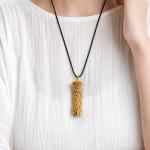
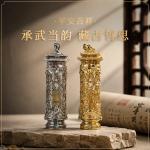
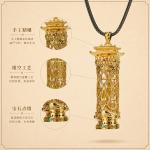
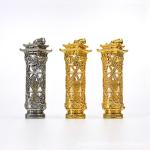
{{ variable.name }} : {{ variable.values[selectedVariantsIndex[variable_index]].name }}
Quantity:
The five phases are metal, wood, water, fire and earth, and the scheme covers mutual generation and restraint as well as the five directions and five colours. The bottle sounds like the word for peace, so folk custom uses it as a sign of safety: peace in all five directions. The combination is not an ancient institution but a later assembly. There are two sequences, the generating and the completing numbers, and which one a plaque uses can be seen from whether the lines close into a ring. The bottle is cut as openwork to leave the positions of the five. In Wudang imagery the five phases usually pair with Zhenwu, and this piece takes only the first half.
The Wudang in the name borrows the Daoist subject matter of Mount Wudang, seat of the Great Emperor Zhenwu. It does not mean the pendant was obtained on the mountain, and the shop has no such connection. Saying that plainly is better than being vague. Asked whether it came from the mountain, the answer is no, it is made after the pattern. Anything genuinely from the mountain means going up yourself, and the price is a separate conversation. Wudang motifs are mostly tortoise and snake, the seven stars and Zhenwu; the five-phase bottle is a side branch.
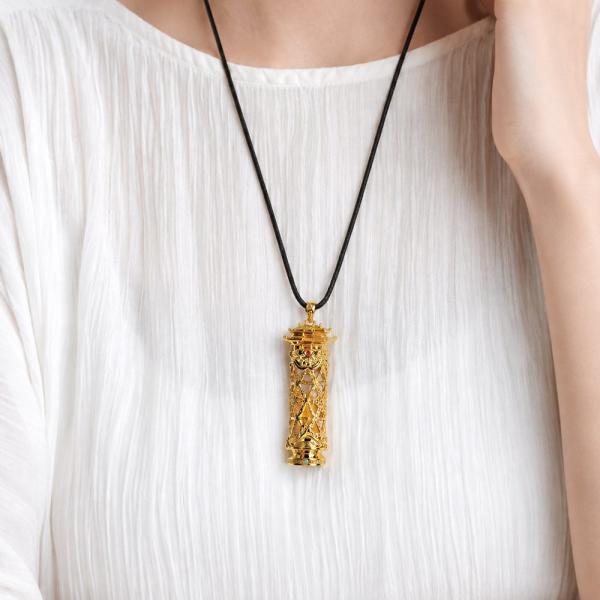
The hard part of openwork is keeping it from deforming. Once the body is cut away the wall is thin, and uneven shrinkage during casting warps it. Straightening is done over a form, and overdoing it cracks the piece. The openings must be even; let the sizes jump and the whole thing falls apart visually. Their positions must be symmetrical, because one off and the light through them goes wrong. Mouth and base are left thick and the belly thinnest, which is how the load runs. Don’t press the thin part with a thumbnail, since a dent there never comes out.
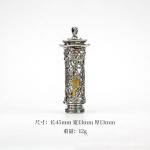
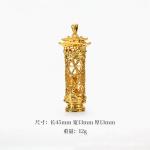
Gold is warm and silver is cold. Gold sits steadily against dark clothing, silver looks clean against pale. The openwork comes from the same mould on both, and the difference is the surface rather than the form. Gold shows white on the edges after long wear, and on openwork the edges are exactly where it shows. Silver darkens as it oxidises, the seams first, and the places you cannot reach become shadow, which looks better than it sounds. Hold it up to the light when choosing: openwork that lets the light through is well cut.
The openings are where dust hides. Don’t use an ultrasonic cleaner, because thin walls don’t take the vibration. Dry-brush with a soft brush and use air for the deep slots. On a dull face, wipe only the raised parts and leave the hollows dark, or the openwork loses its depth. Worn long, grime sets in the seams; warm water with a little neutral soap, half a minute, then out, and don’t leave it soaking. Blot dry rather than rubbing, since openwork edges snag cloth. Choose a thin cord, because the hole is small and a thick one won’t pass.