


Menu
By theme
By theme



{{ variable.name }} : {{ variable.values[selectedVariantsIndex[variable_index]].name }}
Quantity:
The six-syllable mantra is Avalokiteshvara’s heart mantra; the Medicine Buddha has a mantra of his own, and the two are not the same thing. Pieces on the market often cut the six syllables beside a Medicine Buddha, a folk mixture that became a look once enough people recited it. When someone asks, a clear answer is better than going along with it. For strict correctness you would cut the Medicine Buddha’s mantra alone, but it is long and won’t fit a small piece, which is where the mixture came from. The mantra wheel runs clockwise, and cut the other way it turns wrong.
The Medicine Buddha is the teacher of the Eastern Pure Lapis World and made twelve great vows, every one of them landing on the sickness of beings. Images usually show a medicine bowl in the left hand and a myrobalan in the right, or the wish-granting gesture. Blue is the common body colour, though Chinese examples are sometimes painted gold. He is usually flanked by Suryaprabha and Candraprabha, the three together called the Three Medicine Buddhas. One of the twelve vows holds that the sick who hear his name and call on it will be eased, and that is what the scripture says.
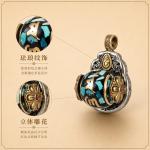
The spinning structure sits in the loop above, with the axle through it and a washer to reduce friction. Whether it turns freely depends on the clearance and on how vertical the axle is. A tilted axle jams at one point of the turn, which the wearer feels as wrongness. The riveted axle cannot be opened, and a failure means replacing the whole piece. It doesn’t need many turns: two or three is enough, and more just loosens it faster. A rasping sound means the washer has worn thin and wants a little oil.
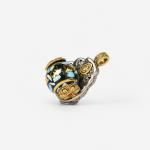
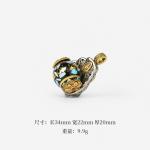
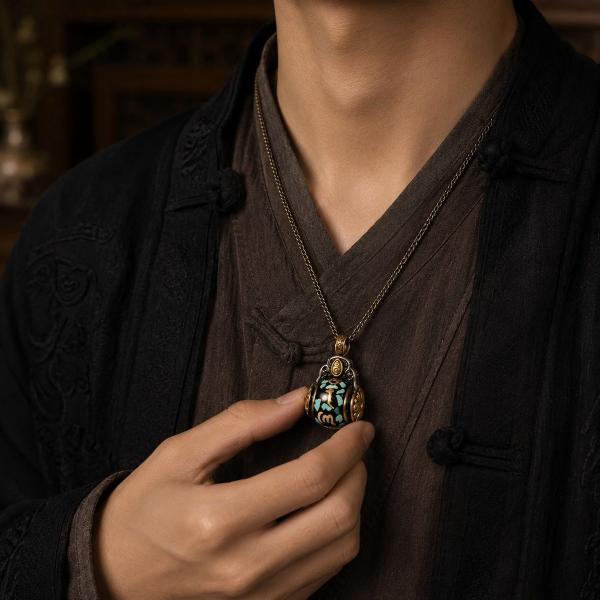
Thin cupronickel needs its edges rounded or it scrapes as it turns. A polished face has the advantage that light travels around it as it spins, and the disadvantage that scratches show. Satin is steadier, with a weaker sense of motion. The Buddha’s face is small, and slight differences in the cutting turn it muddy, so look at the eyes and brows against the light when buying. The robe lines must run continuously, since a break looks like a crack. The mantra on the back is cut shallower so that it doesn’t press against the chest. The pendant is not large and suits either sex; choose a fine chain.
When it is off, set it with the spinning part up, not under pressure. If dust gets into the gap, don’t drip oil in, since oil collects dust and the turning gets stiffer. If it truly seizes, send it back to be opened and cleaned, because prising at it yourself bends the axle. Take it off to shower; moisture in the axle hole rusts over time, and copper rust is green and stains the seam beyond cleaning. What this piece sells is work, not efficacy, and that is as far as the sentence needs to go. Asked whether it can cure illness, that is the one thing never to answer.