


Menu
By theme
By theme



{{ variable.name }} : {{ variable.values[selectedVariantsIndex[variable_index]].name }}
Quantity:
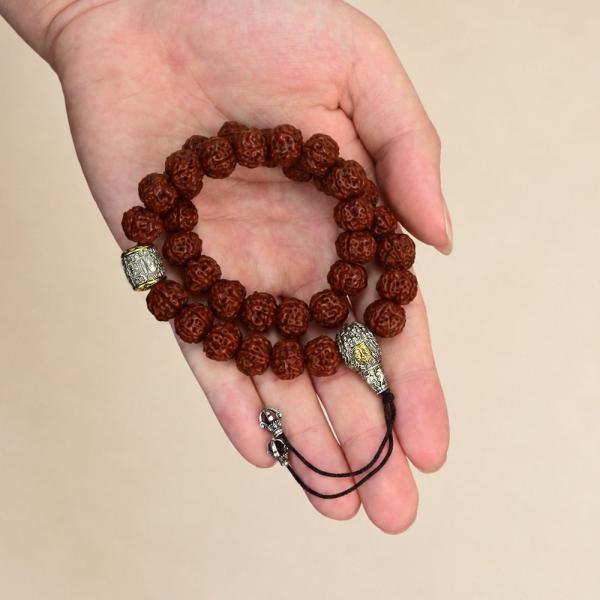
Zakiram's face is wrathful: high brow bones, round eyes, a stretch of tongue showing. Most Tibetan protectors take this form rather than the mild, benevolent one. A first look reads it as fierce; after a while you see that it is authority, not malice. Cast at this size the features can only keep the essentials, brows, eyes, mouth, with the rest left to the silhouette. The small face is where a carver most fears smudging brow and eye into one mass, and it is better to leave a stroke out than to force it in.
A three-hole bead and a spacer bead are two different pieces with two different jobs. The three-hole bead closes a strand, one piece handling the branch. A spacer divides, sitting between beads so the main beads do not knock against each other. Issuing both from one subject lets people who string their own add to a strand they already have instead of replacing the lot. Some use a three-hole bead as a spacer and it wears fine, only the holes sit off-centre and the strand runs less smoothly.
Hole placement is where the craft shows. The three holes of a three-hole bead have to meet at one point, and a drill a fraction off leaves the strand crooked, beads high on one side and low on the other. A spacer has a straight hole and the mouth wants a chamfer, so the line turns inside without being cut through. Before you buy, thread a piece of line through: whether it passes and whether it runs true shows at once, more reliably than a photograph. Spacer holes are usually smaller than those of a three-hole bead, and the line that fits them is thinner, so do not buy the two on the same guess; bring a cut end of your own line, and it will tell you more than the hole looks.
Copper darkens and it also mottles. A new piece is bright enough to glare; worn for a while, the hollows gather shadow while the high points polish against the hand, and the light and dark together look better than either. To hurry it down, leave it alone; to keep it bright, a dry soft cloth. No sandpaper and no copper dip, which eats the metal and flattens the shallow parts of the pattern. And the edges should be dulled: a sharp edge cuts the line, and a strand that breaks at the fitting is the most pointless loss of all.
Pieces this small carry no meaning; talk about the workmanship and that is enough. If a customer asks whether it has been blessed, say no, it is a cast copper fitting. Being clear sells better. It suits bodhi seed and wooden beads, where the cold hardness of the metal sets off the warmth of the wood. Keep copper to no more than three points on one strand; more and it looks like a hardware shop, and less shows better. And keep the bead colours to three or fewer, or it goes busy, since the copper is already a colour of its own.