


Menu
By theme
By theme


{{ variable.name }} : {{ variable.values[selectedVariantsIndex[variable_index]].name }}
Quantity:
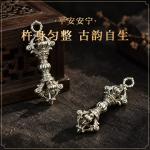
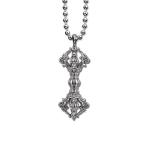
The number of prongs on a vajra means something: one, three, five, nine, each with its own correspondence. Five is the most common. A central prong runs straight through, four others curve out from the hub and close again at either end into a single point. The reading of five prongs as the five directions and five Buddhas is widely taught in Tibetan Buddhism, and some explain them as the five wisdoms; the details differ between schools, and a general grasp is enough. A one-prong vajra is simple. Five prongs are hard, and the difficulty is symmetry.
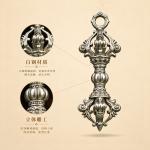
The vajra is a long, slender form, and shrinking it to a pendant means changing the proportions. Copy it exactly and the gaps between prongs are too wide, so it swings as you walk; take it too fine and almost nothing is left where the five prongs close, the molten metal never reaches the point in the cast, and it collapses or breaks. Makers usually thicken the hub and put a hair more metal on the thinnest section. It still looks like the same object and is far stronger. The ridge lines along the body have to run straight; a slight bend and the whole thing looks soft.
White copper is hard, so thin prongs stand up and the lines do not slump into one another. That is the advantage. The disadvantage is brittleness. Drop it on a tile floor and what breaks is usually not the tip but the thin neck where one prong meets another, the place where stress concentrates, and that cannot be repaired. The antiqued finish presses shadow into the hollows and leaves the ridges bright, which is how the edges stay legible. Never hold a white copper piece with pliers: the jaws leave marks that will not rub out.
This is jewellery, not a ritual implement. A true vajra has specifications and a lineage, with rules for size, weight and what is sealed inside it, and it is not the same object as a pendant. Do not talk about the two as if they were. Telling a gift plainly as the form of a vajra is steadier than claiming a blessing. Some people wear it as protection, and that is sentiment; there is no need to pour cold water on it, and no need to raise the claim either. If you want a ritual implement, go to a temple, not a jewellery counter.
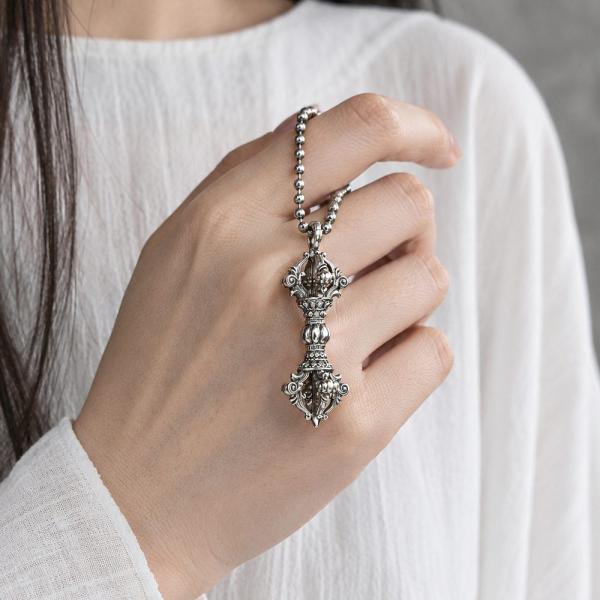
Long pendants like this one turn over. Keep the chain short so the vajra sits just under the collarbone, flat against the chest, and it will not rotate much; a long chain bounces with every step and spends more time face-in than face-out. Point down is the usual way to hang it, though point up is a matter of habit. Leave a little slack in the knot at the hole rather than binding it tight. In summer, copper against sweaty skin leaves a mark, fainter with white copper than with brass.