


Menu
By theme
By theme



{{ variable.name }} : {{ variable.values[selectedVariantsIndex[variable_index]].name }}
Quantity:
Feifei comes from the Classic of Mountains and Seas, in the Central Mountains section, in the entry on Mount Huo: its shape like a leopard-cat, a white tail, a mane, and its name is Feifei; keep it and worry can be set aside. Twenty-odd characters are the whole of the file this beast left in the world. A cat's build, a white tail, a mane at the neck, and keeping one frees a person from sorrow. The ancients often wrote an entry for a strange beast in a single line like that, and everything else was left to whoever painted it. The Central Mountains section is full of such entries; Feifei is one of them.
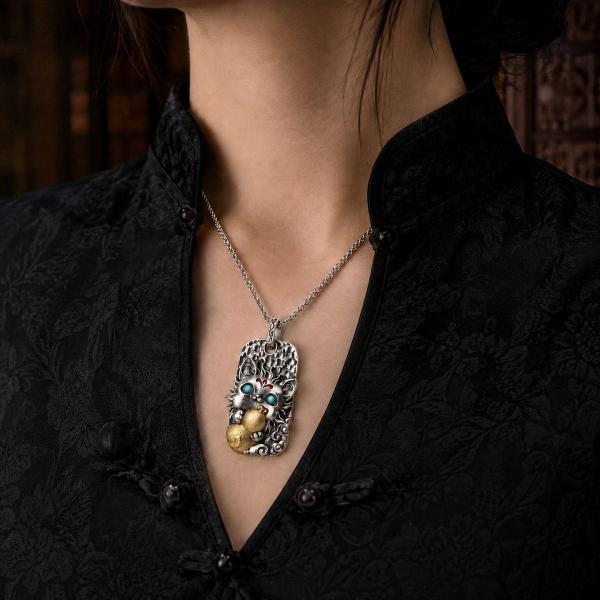
That line about keeping one and setting worry aside is the draw. Not guarding the house, not turning away evil, but dissolving worry, which in this book counts as a rare soft thing to say. The makers of the plaque have taken hold of exactly that: the body rounded and plump like a cat's, the tail lifted, the mane curling outward ring after ring, and a face that need not be fierce, only quiet. Make it a proper beast of prey and you have moved away from the text. The difficulty with strange beasts is not sliding toward dragons and qilin; slide and it turns trite.
A rectangular plaque suits a beast that grows sideways. Lay the plaque landscape and the body runs left to right, the tail gathers at the right, the mane presses along the top edge, and the weight stays gathered. The corners are rounded and a narrow rim runs the border, so the edge can be felt. The white copper ground is cool; polish is kept only on the spine and the forehead, with legs and belly left matte, and that separates the front of the animal from the back. The reverse is flat, so it does not dig into the chest, and it leaves a surface for an inscription.
White copper is not plated; the colour is its own. Out of the box it is silvery pale, and after a summer of wear the side that meets sweat turns warm first, and later the hollows begin to darken. Some people like that passage, others think it looks old. If you do not, more wiping with a soft cloth will slow it, but it will not come back to new: oxidation moves inward, it is not a layer sitting on the surface. Sweat leaves fingerprints; wipe them and they go, leave them and in time they become dark patches.
Mythic beasts are easier to give than gods, with no threshold of belief. Anyone who reads sees the name of the Classic and has something to say. For a friend who reads, put the original line in with it; that is better than any explanation. Some will find the character obscure and be unable to say it, and then it is worth telling them that reading half of it is good enough, since whoever coined it can hardly have expected anyone to be saying it two thousand years later. These beasts have been used too often of late; a quiet piece is harder to run into twice.