


Menu
By theme
By theme

{{ variable.name }} : {{ variable.values[selectedVariantsIndex[variable_index]].name }}
Quantity:
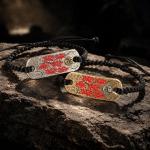
This bracelet is braided from wood and copper together. Wood is warm and copper is cold, one soft and one hard, and on the wrist that makes two sensations: a bead that is smooth and mild, and a touch of metal that arrives cold. The braid holds the two together by tension alone, with no glue and no solder, so how tight the cord is pulled decides how the bracelet feels. The knots used are the flat knot, the vajra knot and the snake knot, which look much alike and differ a great deal in tightness.
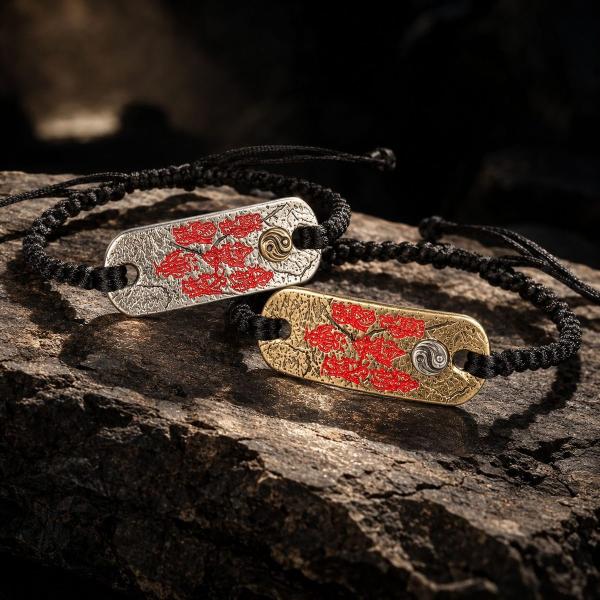
The hammered texture is struck, not moulded. A small hammer falls again and again, one dent next to another, the light scatters, and the surface looks like water when the wind gets to it. No two pieces have their dents in the same places; set two side by side and the patterns do not repeat. The rim of each dent is rounded as the hammer lifts, so it feels like a shallow hollow and does not scrape the skin. A sharp rim means the piece was never finished, and it will rub at clothing within a couple of days. Uneven depth is normal. Texture as even as a machine press looks false.
Wood has the opposite temperament to copper. It fears water and it fears dryness: wash your hands and leave it wet and it goes dull over the weeks, and set it near a radiator and it will crack sooner than anything else in the house. A good wooden bead develops a patina as it is handled, the colour deepening and the light seeming to sink in rather than sit on the surface. In a mixed strand, choose a dense wood, since light woods cannot take daily wear. Put a small spacer between wood and copper so the hard metal edge does not bite directly into the wood.
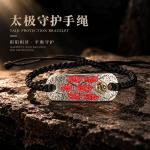
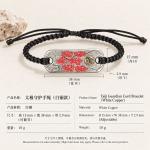
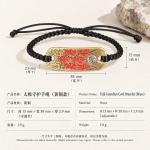
The taiji piece sits at the centre, in a white or a brass version. On white copper the two halves separate by light and dark, and under a lamp the fish eyes read clearly; brass is warmer and the boundary softer, less glaring. What the taiji means is turning, not two semicircles standing still, which is why makers usually cut the divide as an S rather than a straight line. The edge of the piece is rounded, so it does not scratch when it rotates round to the inner wrist.
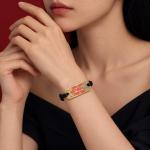
The fit of a braided bracelet should be settled on the first day. Too tight and it leaves a mark that takes half a day to fade; too loose and it spins, so the taiji piece turns to the inside where nobody sees it. Cord fuzzes with use, and the fuzz should not be burned off with a lighter, which leaves it hard and scratchy. Washing your hands in it is fine; take it off for a bath, because wood takes up the steam and then cracks as it dries. When the cord is dirty, work it in warm water with a little soap, rinse it, and dry it in the shade rather than in the sun.