


Menu
By theme
By theme

{{ variable.name }} : {{ variable.values[selectedVariantsIndex[variable_index]].name }}
Quantity:
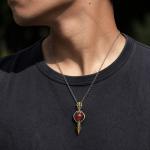
The length of a pendant decides where it sits on the body. A vajra is a vertical form: hung at the middle of the collarbone it slims the line, hung below the chest it looks heavy. A shorter chain puts the vertical of the vajra straight down the breastbone, which looks clean; a longer one lets it turn with movement, showing front and back alternately. Point down is the usual way to wear it, though some wear it point up, according to habit.
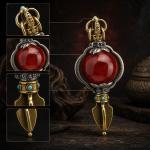
The vajra divides into three sections: prongs at both ends, a grip in the middle, with the prongs coming in single, three and five. Pendants usually take the three or five-pronged form, and the more prongs, the denser the casting detail, so that the ridges stand up when light falls across them. In Chinese it is chu, in Tibetan dorje, common in the hands of wrathful figures and also used as an implement in its own right. It pairs with the bell in ritual, the vajra for method and the bell for wisdom, and that division of labour is more useful than tracing the weapon's origin.
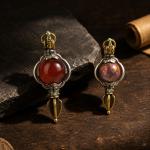
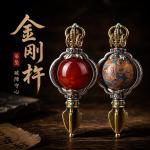
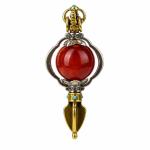
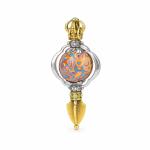
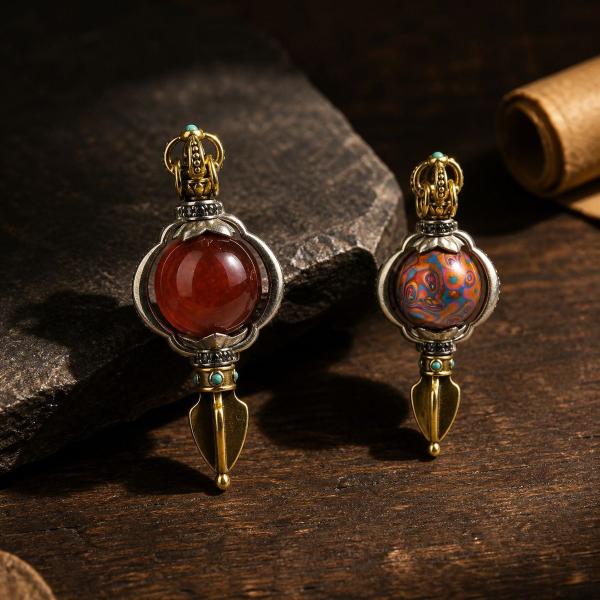
The multi-colour version and the red version differ at the surface. The multi-colour one is brighter, with lively colour and strong reflection; the red is darker, close to old brass, and does not compete against dark clothing. The bright one suits summer and pale clothes, the red one autumn and winter and dark tones. The multi-colour version loses some of the aged layering beneath its finish, which you only see close up. The two are aged to a similar degree; the difference is in the surface colour, not the workmanship. Both are white copper underneath, and its cool tone holds the colour back a little.
White copper's hardness counts in this piece's favour. The prongs are slender, and a soft material would lose the ridges, so that light showed nothing but rounded edges. The pendant has some thickness, so the chain has to carry weight; a fine chain with a heavy pendant and the clasp comes open. It looks better outside clothing than against it, since a vajra is three-dimensional and loses its outline when pressed flat. Choose a finer chain, because too thick a one competes with the pendant.
Take it off for showers and sport, since the points of the prongs are the first thing to suffer a knock. With age the whole turns grey, black in the recesses and bright on the raised areas, and the layering looks better than when it was new. Wipe along the direction of the prongs, because wiping across them dulls the bright faces. It makes a good gift, since the subject is not gender-specific and easy to explain. No oil is needed: a dry cloth is enough, and oil only traps dust. Store it in its own bag, not with keys.