


Menu
By theme
By theme




{{ variable.name }} : {{ variable.values[selectedVariantsIndex[variable_index]].name }}
Quantity:
The eight auspicious symbols began in India, came into Tibet with Buddhism, and later crossed into China proper. The set is the parasol, the golden fish, the treasure vase, the lotus, the right-turning conch, the endless knot, the victory banner and the dharma wheel. Local lists differ on the order, and only the full set is complete — take one out and the meaning thins. Tibet painted them on door curtains and cushion covers; in China they went onto brocade and porcelain, and onto the beams of temple halls.
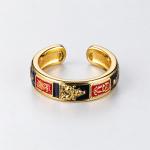
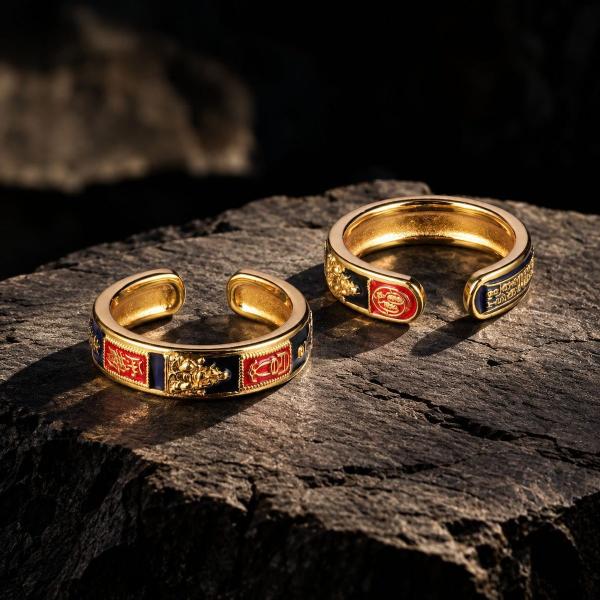
The ring packs all eight into one band. Enamel work starts by filling the sunken cells with ground glass, firing, then filling again as the enamel shrinks, and firing until the surface sits level with the copper wall. Only after polishing does the color settle. Red against green is the old pairing, common on Ming and Qing cloisonné too: red holds the field down, green lifts it. A pinhole the size of a needle tip turns up now and then. Hand-filled cells do that, and it is not a fault; a few degrees of kiln heat and the red fires black, so one firing will not match the next. A ring goes into the kiln two or three times. There is no hurrying it.
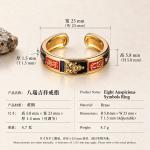
The band is not closed. A gap is left between the ends, and it opens just enough to pass over the finger. White copper has spring; bend it past that and it stays loose, never returns to shape, so once it is on, leave it alone. The two cut ends are where the gold plating goes first, and in time a line of base metal shows through. It does not affect wearing, only looks. The open band means no ring size to report — thick or thin, it will make do. The cost is that every time you take it off and put it on, the gap opens a little wider.
Eight figures crowd one band, each no bigger than a fraction of a little fingernail, so what you read is outline, not detail. The parasol is the curve of its rim; the fish is how the two tails cross; the knot is whether the line comes back on itself. The pattern stands raised and the enamel sits in the hollows, so light finds the copper edges first. Turn a finger and the color turns with it — from across the room a single red-green stripe, up close eight separate marks. Recognize half of them and you are wearing it properly.
Enamel chips. Knock out a piece and the copper shows underneath; there is no repair, only remaking the whole ring. Take it off to wash your hands or the dishes, and do not scrub while wearing it. Plating dislikes sweat. After a summer day’s wear, press it with a dry cloth; a wet wipe pushes the dirt into the seams instead. Dust in the gaps comes out with a dry soft brush. Do not dig at it with a toothpick, which loosens the enamel at the edge. Store it in its own pouch, not strung on a chain with other rings.