


Menu
By theme
By theme


{{ variable.name }} : {{ variable.values[selectedVariantsIndex[variable_index]].name }}
Quantity:
A Daoist command tablet is meant to stand, not to hang. When the officiant works, the tablet is set down flat on the table as the warrant of that altar. The usual shape is a long rectangle with a rounded top and a square base, sometimes hexagonal, the divine name and the command cut on the face and a talisman on the back. The Nine Heavens Responding Prime Thunder Sound Universal Transformer Heavenly Worthy is the chief god of the thunder department, and the Shenxiao line sets him very high; his taboo name on a tablet is one of the common forms. The title is long. Saying it through once takes a fresh breath. Tablets are made in wood and in copper, wood more often, copper heavier.
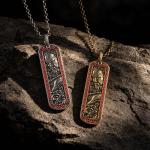
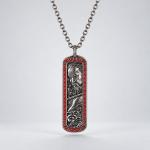
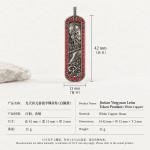
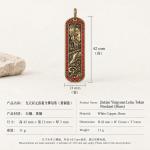
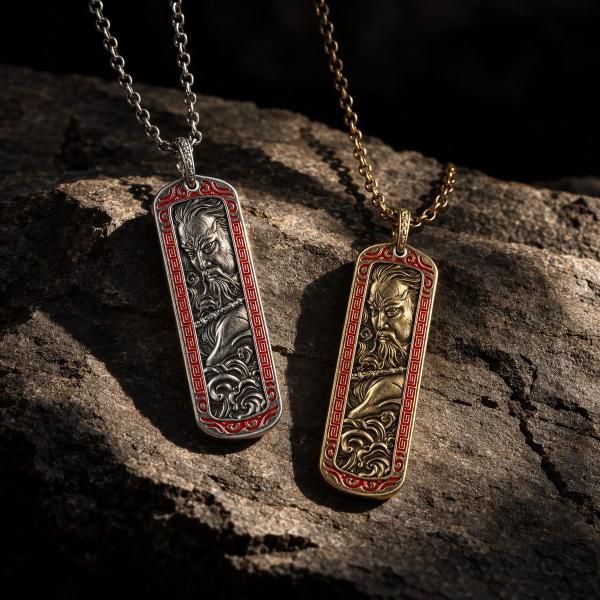
Made into a pendant, the size drops by a long way, the rectangle narrows to a strip, and a hole is drilled at the top for the cord. Change the proportion and the characters have to be laid out again: where three once fitted on a line, two now fit, and the rest move to the back. The antiquing is done so the hollows go black first while the raised faces keep a little shine, as though the piece had stood a long time in incense smoke. That age is manufactured, not worn in, so do not expect it to deepen. The hole sits at the exact center of the top; a hair off and it hangs crooked.
The Thunder Ancestor’s taboo name is dense. The rain radical sits across the top, layer upon layer below it, and written out whole it looks like a small patch of roof tiles. Cutting that kind of character, the blade is held upright and the stroke goes slowly; the gap between a horizontal and a vertical is a single line, and one tremor merges them. After the antiquing, the black sitting in the gaps pulls the strokes apart, so at a distance it is not one dark block. Up close you can count the layers, and that is how you know it was cut properly. The eight dots of the rain radical need air between them.
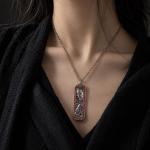
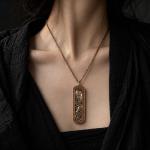
The four options differ in two places: chain or no chain, yellow or white. The chain comes matched, with the clasp at the back, and you will feel for it twice putting it on by yourself; without a chain it is a plaque alone, and you find your own cord. Yellow runs warm and looks more like old bronze once aged; white runs cold and keeps the strokes legible. The plaque is narrow, so a thick cord will ride over the edge and a thin one lies flat. On the chain version the clasp ring slides, so the length can be adjusted.
The pendant lies against the chest, and on anyone who sweats freely the back fogs first. Wipe with a dry cloth in one direction, not back and forth. The aged black is dyed on, so do not go at it with a silver polishing cloth; rub it off and the hollows go white in patches, uglier than a piece left fully bright. When the cord frays, cut a section off and retie it rather than waiting for it to part halfway. Wearing it over a white shirt in summer, verdigris will mark the collar, and that is worth knowing beforehand. Store it flat, not on a nail, or the plaque will bend. A thin copper plaque is hard to true once bent.