


Menu
By theme
By theme




{{ variable.name }} : {{ variable.values[selectedVariantsIndex[variable_index]].name }}
Quantity:
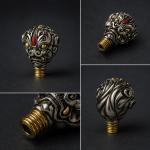
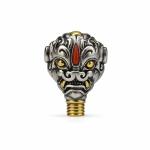
Snow lions turn up constantly in Tibetan pattern work — temple murals, the cushions at home, the door panels of wooden cabinets: white body, green mane, tail lifted, four paws treading on cloud. Unlike the Han stone lion that squats at a gate, its pose is closer to a leap, front legs raised, head slightly turned, as though it might spring forward at any moment. This three-hole bead takes the leaping side of the animal: the body turned to profile, the mane swept back. On Tibetan textiles snow lions usually come in pairs, one to the left and one to the right, with a treasure vase or a dharma wheel held between them.
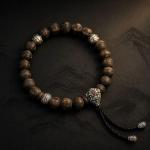
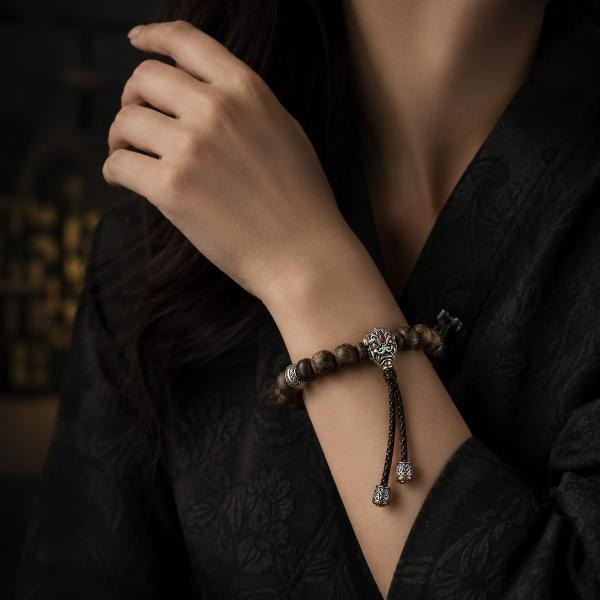
A three-hole bead (guru bead) is the joint of a beaded strand. It has three holes: the main strand runs through from side to side, the dangling charm hangs from the hole underneath, and a run of beads that has gone straight for its whole length turns a corner here, which is what gives the finish somewhere to sit. The inside of the channels is polished, so thread does not fray on its way through; where the three meet there is a little clearance, so the thread keeps some slack and is less likely to wear through against a sharp internal corner. If the main beads are round, keep the lion's face turned outward — worn at an angle, the whole strand looks unkempt.
The material is copper, and the surface keeps its casting grain: the hollows sit dark, the raised passages have been rubbed bright, so there is depth at a distance and a fine stipple under the fingertip. That grain is left by the mould, and the pits fall differently on every piece, which is why even a matched pair is never quite identical. The colour leans red, close to the warm tone of old Tibetan copper, and it sits easily beside dark wood beads or coconut shell.
In Tibetan the snow lion is called gangs seng, literally the lion in the snow. It is usually read as a sign of fearlessness and is bound up with the snow mountains and the high plateau. Carrying the subject onto metal depends on how deeply the mould is cut and on the chiselling that follows: whether the strands of the mane separate cleanly, whether the teeth and claws are properly articulated. Up close, that is what tells you. Done badly, the lion turns into a lump. In painting the mane is turquoise; metal cannot hold colour, so the engraver can only suggest it through the spacing of lines.
Copper darkens slowly with sweat and air. That is ordinary oxidation, not a fault. If the colour bothers you, wipe it with a dry cloth rather than an ammonia-based cleaner, which will lift the darkened patina out of the hollows along with the dirt. When you string it, put the three-hole bead at the finishing point with the charm hanging below: the centre of gravity of the strand drops a little and it is less inclined to turn over on the wrist. As a gift this motif is on the fierce side — better suited to someone who is always on the road than to an older relative.