


Menu
By theme
By theme



{{ variable.name }} : {{ variable.values[selectedVariantsIndex[variable_index]].name }}
Quantity:
Among the three saints of the western paradise, Mahasthamaprapta stands at Amitabha’s right hand and Guanyin at his left. His image is usually paired with Guanyin, and the two are told apart by the crown: Guanyin’s holds a small transformed Buddha, Mahasthamaprapta’s holds a treasure vase. The difference is slight, invisible unless you come close, and it becomes a habit only after a while. The three Pure Land sutras mention him briefly, yet his image was settled early. The vase in the crown means that wisdom and merit are both kept inside and do not leak away. In a temple that sets out the three, Amitabha is in the middle with Guanyin and Mahasthamaprapta to either side.
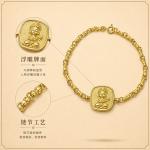
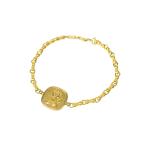
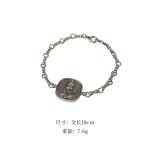
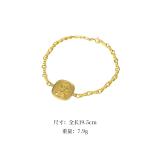
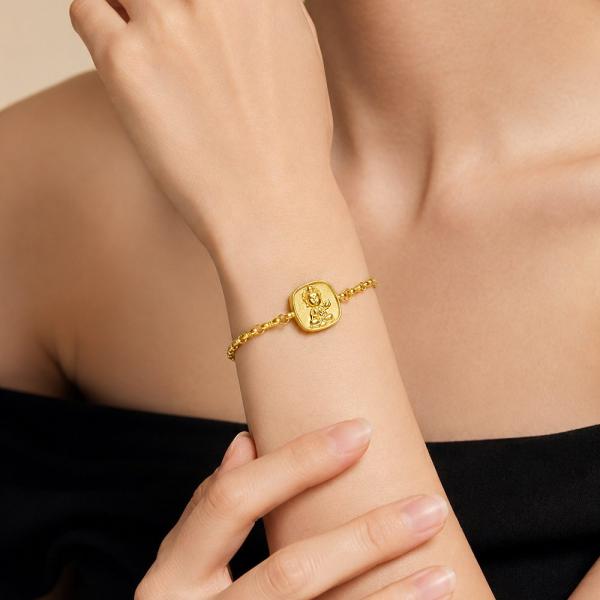
A square plaque made into a bracelet: the face runs long, the bodhisattva stands, the drapery lines are straight and shallow. A square lays out a picture better than a round plaque, since the four corners hold their ground and the vase, the lotus seat and the ribbons can all be placed. A narrow ridge runs around the edge, containing the shape and keeping the face from looking thin. The corners are rounded, or the piece snags a sweater. A vertical line down the center divides the plaque in two, and the figure is set on that line. Narrow and long is the rule: too wide and it reads as a signboard, too narrow and there is no room for a person.
The plaque is cast and then finished by hand. The depth of the drapery lines is what tests the hand: cut too deep and they are trenches, too shallow and the light flattens them out of sight. Here the lines are shallow and show only where the polished face catches the light. The face is given as an outline with the features reduced to almost nothing, which is the usual practice at this size; cut finer and it blurs. After casting the plaque is sanded, the burrs along the edges taken off, and then polished.
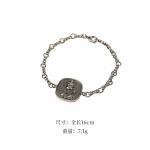
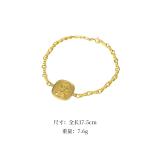
Bracelets are sized by wrist: 16, 17.5, 18 and 19.5 centimeters, with two colors in each. Measure close, but a finger should still slide under the chain; too loose and it turns around to the back of the hand. The links are set with a little play so bending the wrist does not pinch. The clasp is an S, and fastening it one-handed takes two tries before it comes naturally. The links are pressed, one closing over the next, with no solder, so a broken link can be replaced on its own. The joints on white copper are a little sharp; run a finger around the inside before you wear it.
Copper darkens where it meets sweat, most of all on the back of the plaque against the wrist. Wipe it once a week with a dry cloth rather than waiting for it to go black. Dirt in the gaps between links comes out with a soft brush; dry it before putting it away. Store it flat, not hanging, or the chain stretches over time. The two colors wear at different rates, and the yellow one shows copper first. A bracelet adjusts better than a bangle: a wrist half a size off still fits, with the clasp moved one hole.