


Menu
By theme
By theme



{{ variable.name }} : {{ variable.values[selectedVariantsIndex[variable_index]].name }}
Quantity:
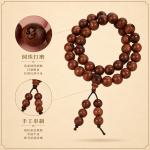
The number thirty-six has a set of correspondences in Daoism. The thunder department has thirty-six generals, the Tiangang has thirty-six methods, and among the host stars of the Dipper there are thirty-six Tiangang stars. The names differ, but the number falls together, and folk usage likes to treat thirty-six as a round whole. This strand is cut with talismans, bead by bead, and takes the line of the thirty-six thunder generals. Their names can be looked up in ritual books such as the Daofa Huiyuan, with small differences between regional copies. The number matches; the identities need not correspond one to one. Folk habit rounds things off.
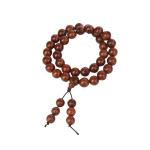
The words lightning-struck in the wood’s name are a folk term. The old people held that a tree struck by lightning carries thunder qi, and preferred such wood for seals and command tablets, jujube and peach above the rest. Real material is hard to find. Most of what is sold now is jujube wood itself: fine grain, a reddish cast, heavy in the hand. A name is a name and wood is wood. Jujube is dense, sinks in water, and takes a shine when polished without any wax.
The beads are round, ground one at a time, drilled through, and then cut with the talisman. Cutting characters in wood is harder than in copper. Wood has grain, and the knife has to follow it or the edge breaks out; take the blade across the grain and the edge tears up. After cutting comes sanding, which takes the torn fibers down so the strokes of the talisman stay unbroken. Thirty-six beads carry the same talisman. Ruin one and the strand is a number short. A talisman wants one stroke carried to the end; lift the knife halfway and the talisman loses its breath, which is how the old craftsmen put it. The strokes vary in weight: the tip for the fine, the belly of the blade for the thick.
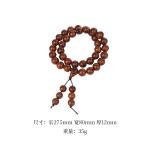
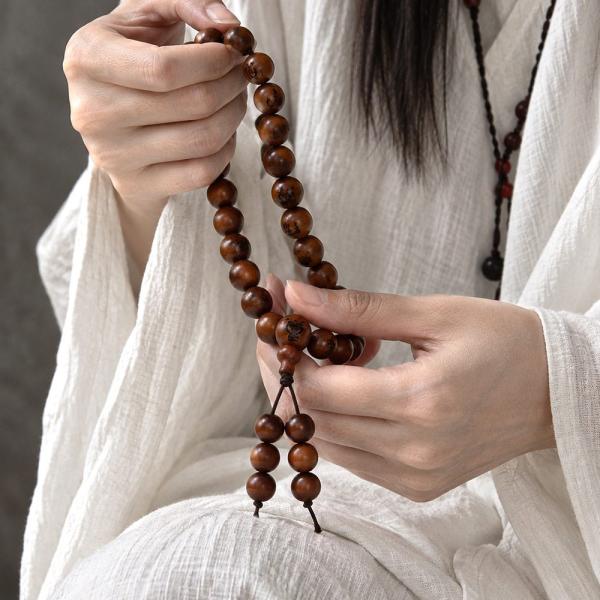
The idea behind a turning strand is that with something in the hand the mind settles. A bead travels around the fingers, one after another; hurry it and beads jump. Thirty-six is shorter than one hundred and eight, goes around the wrist a little over two turns, and can be held in the palm as well. The beads have to be even in size, since a small difference shows as a rise and fall along the strand. The hands should be clean when you turn it; a sweaty hand turns beads black, not red.
Jujube fears water. Take it off to wash your hands, and dry it at once if it gets wet, or it will mold inside a bag. Northern winters are dry and the beads split, so keep them off a radiator and away from window glass. With a new strand, turn it dry for a few days first and let the surface take a little oil from the hand; the color comes slowly, and soaking it in oil only turns it dull. Do not leave it in the car when you are not wearing it. A day in the sun will split it faster than a drop will. If a bead does split, work a little wood glue into the crack along the grain and press it overnight.