


Menu
By theme
By theme



{{ variable.name }} : {{ variable.values[selectedVariantsIndex[variable_index]].name }}
Quantity:
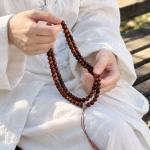
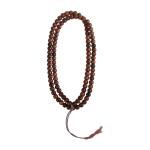
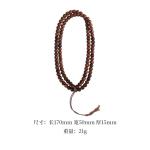
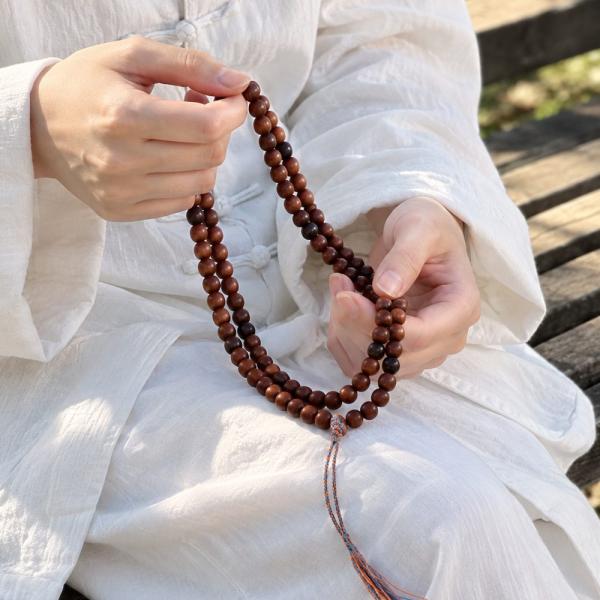
One hundred and eight is the commonest number for a mala. The explanations vary. One holds that it matches the hundred and eight afflictions: recite once and move one bead, and when the round is finished the afflictions have been passed through once. Another holds that it matches the hundred and eight samadhis. Once the number is fixed, the shape of the beads and the arrangement of the fittings are fixed with it, and changing one bead means changing the lot. Buying a whole strand saves the trouble of assembling one. A hundred and eight beads take one guru bead, with the disciple beads hung below it, and that is the set form. The number is fixed. The wearer does not have to count; knowing it is a hundred and eight is enough.
Old shape refers to the form of the bead. New work likes a true sphere; old beads are mostly barrels or apple rounds, flattened at both ends, swelling at the middle, the mouth of the hole drawn in a little on each side. That shape sits well in the hand when you turn it, two beads meet flush, and no hair gets pinched between them on the strand. Old-shape beads waste material: each one is taken out of thick stock, and what comes off the lathe is good only for kindling. A barrel’s hole is longer than a sphere’s, so there is more friction when stringing and the cord wears out sooner.
Jujube grain is fine and the color runs red-brown; turned long enough, it takes on a soft sheen. Wood beads are not lacquered. Lacquer seals the surface and nothing further can happen to it. The price of no lacquer is that the wood fears water and fears dirty hands, and for the first month it is best to wash your hands before turning the strand. The oil from your own hand suits it better than any care oil, provided there is little of it and it is spread evenly. Jujube pores are fine; coarse-pored stock is cheap and turns up coarse. A new bead feels dry, and it takes a week of turning before the sheen comes.
The rhythm of turning matters more than anything else. Half an hour a day beats three hours at the weekend. The beads travel through the hand one at a time, and there is no hurrying them. The cord slackens with use and the strand lengthens; when the slack is obvious, it is time to restring. When you restring, pick out the beads whose hole edges have furred and put them at the two ends, not in the middle. The strand lengthens with the season too: strung in autumn, loose by winter. That is the temper of wood. Cotton cord is better than nylon; cotton is soft and does not cut the hand.
Store it in a cotton bag, not a plastic one, because wood needs to breathe. In the damp south, keep a small packet of desiccant in the bag. In the dry north, keep it off the windowsill. Do not fill a crack with glue; the color will not match, and it is better to let the piece settle on its own. A hundred and eight beads go around the wrist four times, which is a little conspicuous out of doors. When the beads are dirty, wipe with a barely damp cotton cloth and follow at once with a dry one, leaving no water marks.