


Menu
By theme
By theme

{{ variable.name }} : {{ variable.values[selectedVariantsIndex[variable_index]].name }}
Quantity:
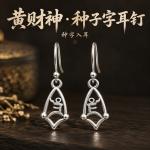
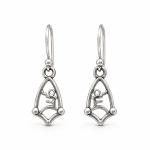
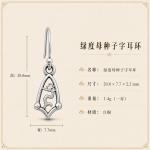
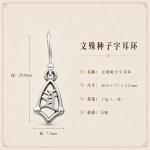
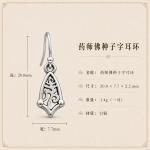
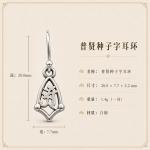
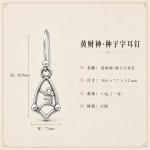
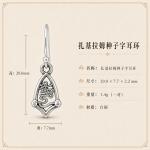
A seed syllable is a single syllable in Sanskrit or Tibetan that stands for one particular deity. Chant a whole sadhana and the syllable you keep repeating is usually that one, which is why it is treated as the condensation of the deity's voice. There is only the one letter, but the way it is written is exacting: the length of a stroke, the direction of a hook, all follow fixed forms, and a stroke in the wrong place makes it a different letter — anyone who knows the script will see it at once. These earrings shrink the letter to the size of an earlobe, which is work for a fine chisel. Tibetan often has several ways of writing the same sound; the form used here is the most widely current.
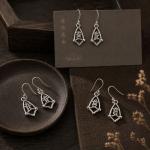
Six designs stand for six figures: Medicine Buddha, Zakiram, Manjushri, Green Tara, Samantabhadra and Yellow Jambhala. The Medicine Buddha is usually shown with a blue body in thangka painting; here only the letter is taken, not the colour. Zakiram is a female protector in Tibetan folk belief, Manjushri governs wisdom, Green Tara is known for rescue, Samantabhadra for vows and practice, and Yellow Jambhala heads the five Jambhalas. Six figures with six different lineages, set side by side without any sense of conflict. Colour and size are consistent across the range, so they mix without fighting: a Medicine Buddha on one side and a Green Tara on the other is a reasonable pairing.
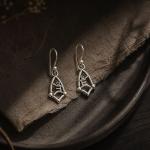
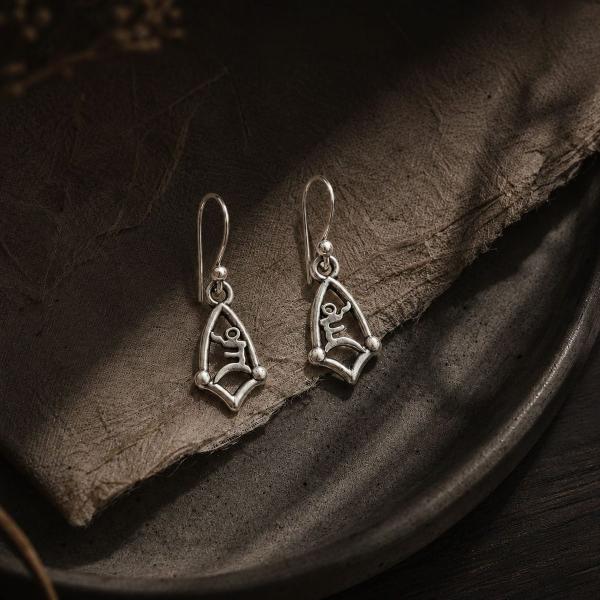
Copper, sold as a pair, with the letter reversed from left to right so that both face outward when worn. The area is small and the lines crowded; strokes that are too fine would clog, so the letter on the actual piece is a little heavier than on paper. That is a limit of the process, not a mistake in the writing. Hook and drop are cast in one piece, which leaves one less joint and one less place to break; the end of the hook is closed off so it does not scratch the skin on the way through. The gauge follows a common piercing; anyone with small holes will find them snug, so do not force them.
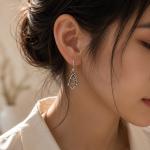
Weight is the old contradiction with earrings: too light feels cheap, too heavy drags the lobe. This pair is made thin with rounded edges, so the lobe does not ache after a full day, and the price is that the back has to be perfectly flat — turn it over and there should be no burr. Rub a finger across the back when they arrive and take the finest abrasive paper lightly to anything that catches. If your lobes are thin, a small silicone backing on the hook will stop them slipping and stop you losing one.
Do not overthink the choice of design. Pick the figure you actually recite or look at. Set the six letters side by side and the eye usually arrives before the reasoning does. Copper darkens with sweat, and the skin behind the ear is a place that sweats; a quick wipe after wearing keeps the marks down. Store them apart when they come off — two pieces rubbing together will polish the high points of the lettering away, and in time the shape goes blunt. A slip of paper comes with the packaging naming the figure each letter belongs to, so whoever receives them does not have to guess.