


Menu
By theme
By theme

{{ variable.name }} : {{ variable.values[selectedVariantsIndex[variable_index]].name }}
Quantity:
The Mountain Ghost coin was never money you could spend. It belongs to the class of charms cast purely to be hung or carried: usually the two characters for Mountain Ghost on the face, and on the back something like a thunder order or a bagua diagram, with layouts varying from place to place and some carrying an incantation as well. Collectors file these separately from circulating coin, under the name “flower coins,” and price them on their own scale. The label came from later writers; the older books wrote it with a different character for the same sound, and either way the sense is to press down on what is baleful and ask for a little luck.
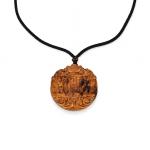
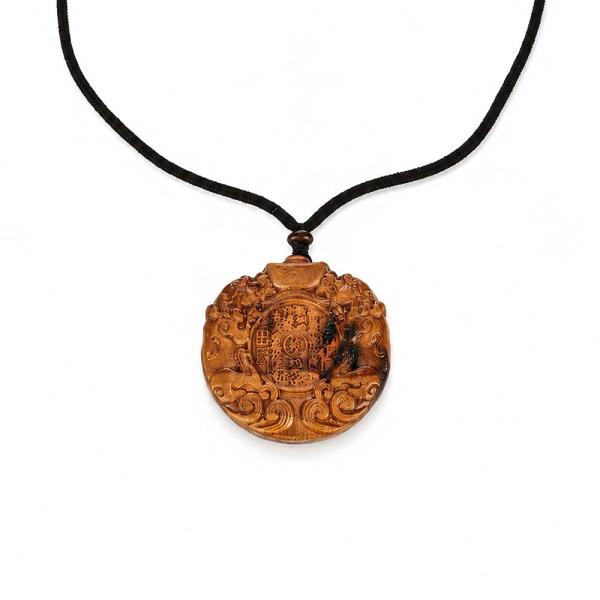
This one takes the silhouette of a silver ingot. The ingot is folk shorthand for wealth — raised at both ends, pinched at the waist — and the plaque follows that outline, with a ridge raised along each shoulder so the shape holds. In casting, the ingot profile is where the shoulders most often come up short of metal; turn the piece edge-on to the light when you inspect it and a hollow at the shoulder shows at once. If the cord hole is drilled at the pinched waist, the load sits best and the plaque is less likely to flip.
An applied aged finish and real patina are two different things. New white copper shines with a green cast; an aged finish blackens the hollows and polishes the highs, chasing the contrast an old coin gets from decades of handling. That black is dyed on, and alcohol takes it off; true patina is oxide and does not come off. Don’t mistake a finish for age. If a seller is vague about it, ask straight out whether the piece is newly made. Left alone, white copper turns a little warm yellow on its own — that is oxidation, and not the same layer as the applied black.
An ingot plaque is wide at the top and narrow below, so the weight sits high, and once it is strung it tends to tip forward. With a single hole centered on the top edge it will turn its face away as it hangs; two holes split the load and hold far steadier, so check the hole placement before buying. Dark brown waxed cord suits it best; black reads harder. With a large face, don’t go too fine on the chain — a thin chain can’t carry it and will deform in a couple of days. In summer, against thin clothing, the plaque presses an ingot-shaped mark into your chest. There is no avoiding that; you choose the shirt.
The Mountain Ghost subject has its roots in old folk practice against evil, and it is not the same lineage as the god of wealth, whatever the ingot shape suggests. Think about whether the person you are giving it to cares about any of this: to a believer it is a keepsake, to a skeptic just a piece of copper in an antique style. Some customers buy it to weigh down a book, or hang it behind a study door, and both are fair uses. Others ask whether they can spend it. No — the hole isn’t even round, and it has never been on a string of cash.