


Menu
By theme
By theme


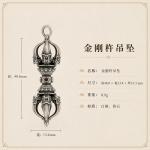
{{ variable.name }} : {{ variable.values[selectedVariantsIndex[variable_index]].name }}
Quantity:
The vajra began as an Indian weapon and became a ritual implement as Buddhism took it up, its meaning shifting to “indestructible” — like diamond, which breaks everything and is itself unbroken. So when it appears in the hand it is not there to strike with but to state something: solidity, the capacity to cut, a stability that does not retreat. In Tibetan sculpture the vajra is usually paired with the bell, one on each side, one standing for method and one for wisdom.
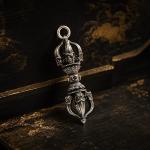
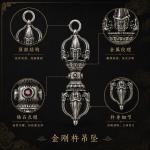
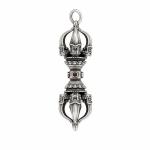
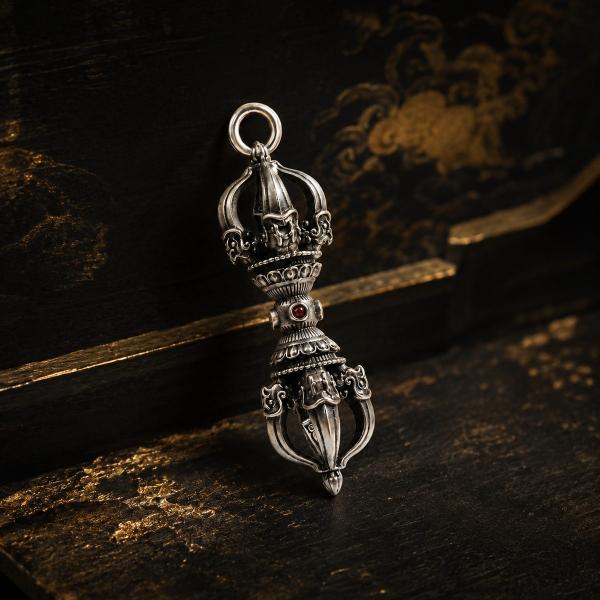
Five prongs is the commonest form. A central prong runs long and straight, four others curve back at the corners and run parallel to it, and together they point in five directions. In thangka painting and in sculpture the five prongs correspond to the five Buddha families and to five kinds of wisdom. The body narrows at the waist and the two ends mirror each other, so the whole thing is judged on proportion: prongs too long look hollow, too short look clumsy, and if the waist sits a little off centre the piece will not stand. The gaps between prongs should be even — the eye will not catch it, but a finger run round will.
This one is white copper (cupronickel), silver-white in tone, with a shine that owes nothing to plating. White copper is harder than pure copper, so long thin prongs resist bending, at the cost of a cooler colour that is not on the same road as the warmth of old copper. The surface has a light matt finish, so that light breaks up on it instead of glaring; the spaces between the prongs are clean, with no casting nodules to catch the cord. White copper contains nickel and a small number of people react to it, so try it against the inside of the wrist for a day before wearing it on the skin.
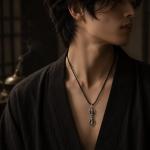
The pendant is small and hangs below the collarbone. A plain round neckline is the safest setting; a neckline with its own pattern will compete. Use a thin cord — a thick one under a small pendant makes the top heavy and the piece swings off centre within a few steps. Leave a little play between the ring and the knot so the vajra can turn; fixed with one face always outward it becomes monotonous. With a deeper neckline the pendant drops towards the chest, and the horizontal spread of the prongs reads more clearly than the vertical.
Wipe sweat off white copper before putting it away. For long periods in storage, a resealable bag slows the darkening; where it has already gone dull, rub a silver cloth in one direction rather than in circles. The prong tips are the thinnest part of the piece and the first thing to bend if it lands on a hard floor, so do not carry it in the same pocket as keys or coins. If green verdigris appears in the gaps, work in a little neutral soap, rinse and dry it immediately.