


Menu
By theme
By theme

{{ variable.name }} : {{ variable.values[selectedVariantsIndex[variable_index]].name }}
Quantity:
Pixiu in folk tale has a mouth and no back passage: what it takes in, it keeps. That is why it is treated as a beast that gathers wealth. The story is widely told but not in one version — some make it one of the nine sons of the dragon, some lump it together with tianlu and bixie, and nobody can point to an origin. I sell it on that lucky turn of phrase and promise nothing on top of it. Folk custom also fusses over which way the head faces, in on the left and out on the right; there are more sayings than shapes, so hear them and let them go.
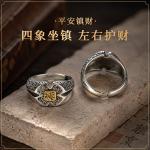
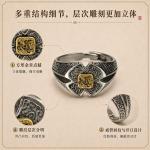
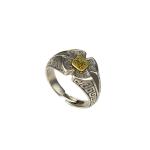
The pixiu lies at the center of the face, head toward the fingertip, body spread to either side, with a meander border pressed around the edge. This composition fails when head and body run together: carve the head shallow and at a distance it is one lump. When you choose one, hold the ring level with your eye and check whether mouth, eye and horn separate. If they do, the carving was not skimped. A narrow flat is left at the rim so the relief can stand high without scraping the hand — the trade calls that the pressed edge.
The border on the face is a meander: one line turning back on itself without a break. It descends from the thunder pattern on Shang and Zhou bronzes and, from the Song onward, ran along the edges of furniture, textiles and porcelain; in folk speech it is simply “fortune that never breaks off.” The pattern is ornament and has nothing to do with money, but the ring of it does close the edge of the face, so the design does not come apart. The corners must stay square — round them and you have cloud scrolls, and the two get confused all the time.
White copper, cast, black left in the hollows and polished on the highs; the pixiu’s teeth and claws blur most easily. Some like that dim, old look; others want it bright, which reads clean until a scratch shows white. Both sell, and it depends on what the customer wears. The black in the hollows fades with time, and once it goes grey it looks poor; keep the piece out of the sun in storage.
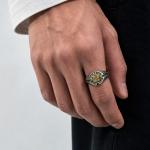
Half the buyers wear it themselves; half are giving it to a relative with a shop. Say the thing plainly when you give it: this is an old lucky phrase, a wish for things to run smooth — not a talisman, and no guarantee of business. The face is wide, and on a short finger it looks clumsy, so have them try it. Fingers swell in summer: the size you measure in the morning may be tight by evening. I have also sold one to a young woman who simply liked the animal’s face, and in that case there is no need to talk about drawing wealth at all.