


Menu
By theme
By theme


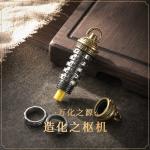
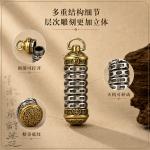
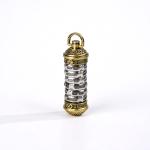
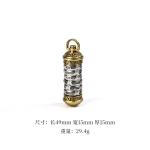
{{ variable.name }} : {{ variable.values[selectedVariantsIndex[variable_index]].name }}
Quantity:
The two characters for tianji did not originally mean a secret. In the Great and Venerable Teacher chapter of Zhuangzi: where the appetites run deep, the heavenly mechanism runs shallow — tianji there is the bit of native quickness in a person, and deep appetites shallow it out. Only later did it slide into the tianji of “heaven’s secrets may not be revealed,” and the meaning has been drifting downward, ever more occult, since. Zhuangzi’s line is about the true man, not about some confidential matter in ordinary people that could leak.
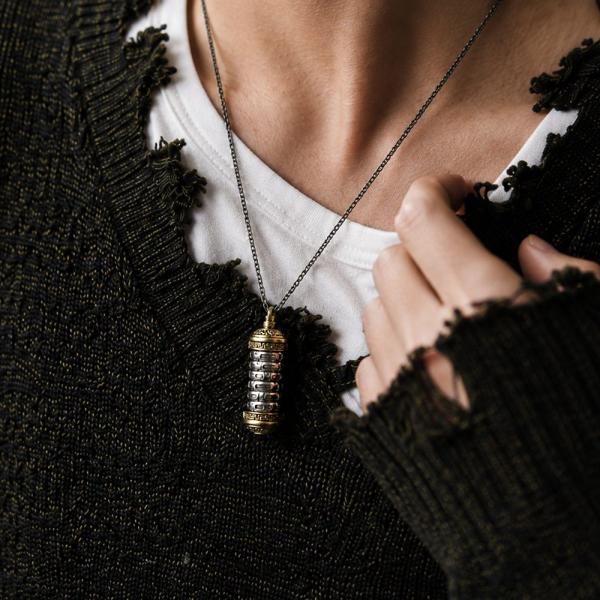
There are two specifications: the pendant alone, or the pendant sent with a Chopin chain. A Chopin chain is fine links caught one in the next — soft, close to the body, but its load points are thin and it does not suit a heavy plaque. The pendant alone lets you choose your own cord, waxed or leather, and a darker cord holds the piece down. The hole is at the top, so the plaque tips forward; a spacer bead will brace it. Dark brown for the waxed cord, natural for the leather, and neither competes with the face.
Sculpted relief is not the same as a flat plaque: the face rises and falls, and the layers only show with light coming from the side. In casting, thick areas tend to shrink, so the back is made concave to offset it, which is why this kind of plaque feels domed at the front and hollow at the back. The hollow is left unpolished on purpose: polish it and the piece looks thin. The hollow also thins the thick section, and turning it over shows how much room the caster left himself. A rim has to be kept around the hollow; make it narrow and one pass on the face cuts through.
White copper is polished bright on the highs and left with a matte tooth in the lows, and that alternation of light and dark is what stands the relief up. Too much bright surface and the plaque looks greasy; all matte and it looks unfinished. Good work keeps the bright only on the forehead, the shoulders, the ridges of the drapery, and holds everything else down. Finger wear will dull the bright areas — not a quality problem, copper does this. Polishing goes coarse to fine; skip to the fine grit and the earlier scratches never come out.
With this kind of plaque there is no point talking about symbolism; the carving is enough to talk about. Sculpted relief is looked at by turning it: the composition from the front, the rise of the relief from the side, the closing of the base from the back. Give it to a designer or a carver and he will look at those three things; give it to someone who knows nothing and he takes it for a patterned piece of copper, which is no loss. Some use it as a bookmark weight, letting a corner show from a thick book — better looking than the bookmark. Copper needs no oil; oil collects dust and darkens it further.