


Menu
By theme
By theme


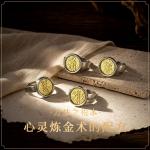
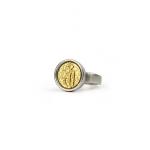
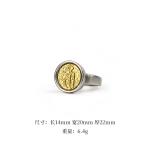
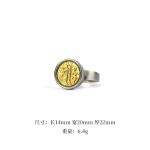
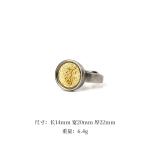
{{ variable.name }} : {{ variable.values[selectedVariantsIndex[variable_index]].name }}
Quantity:
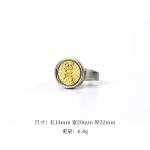
Seed syllable is a Tibetan Buddhist term: a single Sanskrit letter standing for one deity, used in visualization. The letters are mostly round forms, one syllable filling one circle, the strokes kept inside the circle and not running out. It is not the same as a mantra: a mantra is a string of sounds, a seed syllable is one letter, and its work is in visualization. Different schools write them differently; the same deity can come out a few strokes apart between schools. Only one letter fits on a ring face — two crowd it — which is why it is usually made as a single character.
The four options correspond to four figures: Green Tara, Yellow Jambhala, Manjushri, and Zhaji Lhamo. Manjushri’s seed syllable is the same as the last syllable of his heart mantra, usually transcribed in Chinese as a short, clipped sound that closes firmly. The other three have their own forms and I will not go through them one by one; more talk means more chance of error, and it is better to know the deity than the letter. The differences between the forms are fine, and without study you cannot see them.
Zhaji Lhamo’s name is uncommon outside Tibet. She is a local protector from around Lhasa, later taken up by traders as a wealth deity, and her incense burns strong among people in business. A local deity of this kind is not the same as a bodhisattva in the system; people pray to her for things to run smoothly, not for teaching. What her devotees want is a steady flow of customers, which is closer to a wealth god than to a bodhisattva.
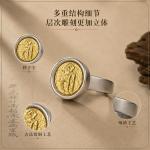
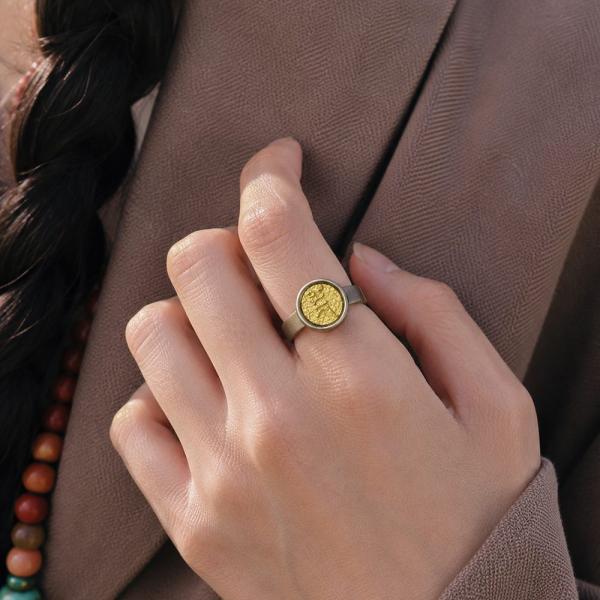
An adjustable ring has a gap in the band with the two ends overlapping, so it can be opened or closed. White copper has enough spring to take a few bends without breaking, but bending the same spot repeatedly raises a fatigue line, and once it deepens the ring should be replaced. Put it on from the fingertip sideways rather than pushing from the pad; push and the gap widens a little each time. The two ends of the gap need rounding — left sharp, they scrape when you open it. On a fleshy finger base an open band is more comfortable than a closed one, and you can give yourself half a size.
With relief on the face, the lettering is where dirt collects; wash your hands before putting it on and you save yourself trouble. The advantage of an open band is that you do not need a measurement; the disadvantage is that it loosens with wear, and you bend it again, a limited number of times. As a gift, ask first which figure the person follows — the four look after different things, and the wrong one leaves an awkward feeling. Occasionally someone buys all four, saying they want the set. I do not argue, but gathered together they lose the sense of one thing at the center.