


Menu
By theme
By theme


{{ variable.name }} : {{ variable.values[selectedVariantsIndex[variable_index]].name }}
Quantity:
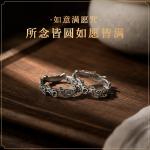
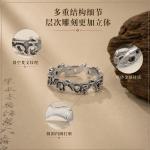
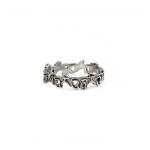
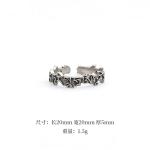
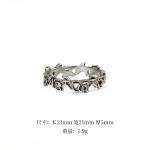
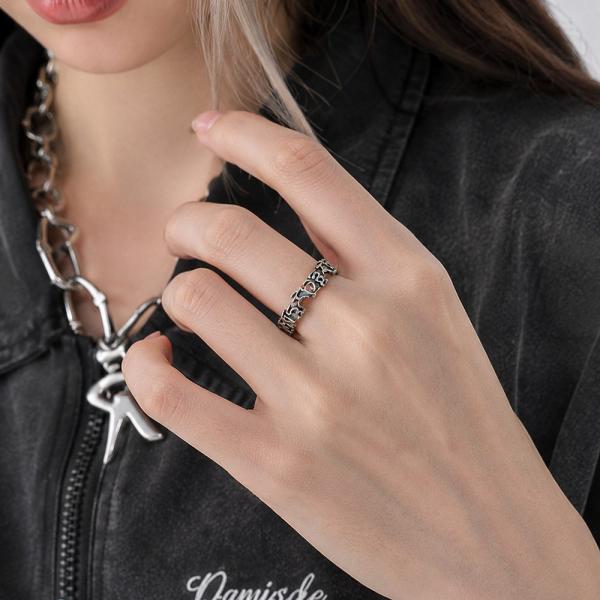
A ring of Sanskrit runs around the band, the characters cut through so that light passes between them. That is the openwork in the name. The Green Tara mantra has few syllables, so spread around a full circumference they have to repeat, each syllable meeting the next, and light comes through the gaps. The band looks lighter than it is. The width of the lettering strip is what makes or breaks a ring like this: too wide and it looks heavy, too narrow and it distorts. The inside is plain, left unpatterned where it meets skin, so sweat does not grind.
In Tibetan Buddhism Tara is Avalokiteshvara's compassion taking form; Green Tara heads the twenty-one Taras, green in body colour, standing for activity and action. The mantra is usually written Om Tare Tuttare Ture Soha and carved on mani stones, prayer flags and amulets. More people recite it than read sutras. Few in the Chinese heartland knew Tara until Tibetan practice spread in recent decades. In Tibet the mantra is sound rather than text, so you can recite it whether or not you read. Old people there recite without a book, one line into the next, from familiarity.
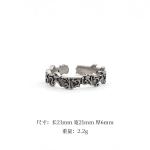
The listing offers a closed version, along with men's and women's versions, while the size field says open and adjustable. The two do not agree. A closed band is fixed; only a band you can bend is open. Ask which one you are getting before ordering, so the parcel does not arrive as something other than what you pictured. Men's and women's, read literally, means a difference in band diameter, but the listing does not say how much; you have to ask.
Openwork cuts the band thin with strips of lettering, so it carries load less well than solid metal. When easing the size, grip the widest parts of the lettering with both hands and add pressure slowly. Do not squeeze the joints of thin strokes, which are the most brittle and will ruin the piece if they snap. Anyone used to solid rings will find it light at first, and rough too: the edges of the strips are hard and do not lie flat to the finger. Take it off for showers, since water sits in the letter gaps and dries slowly. The wide part of the strip lands on the back of the finger and the narrow part at the base, so the load is uneven to begin with.
White copper is not coloured; its own tone is greyish white, and over time sweat dulls it, the letter gaps darkening first. Clean with a soft toothbrush and a little mild hand soap, dry at once, and never soak it. It contains nickel, so sensitive skin should test-wear before committing. Openwork like this is not for daily hauling; one press and the lettering skews, and a skew cannot be bent back. If an edge raises a burr, pass the finest abrasive paper over it lightly and no more.