


Menu
By theme
By theme

{{ variable.name }} : {{ variable.values[selectedVariantsIndex[variable_index]].name }}
Quantity:
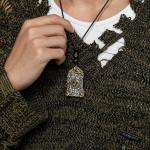
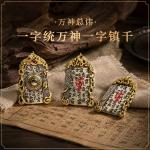
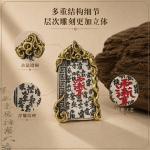
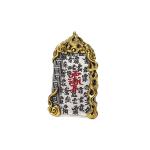
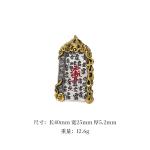
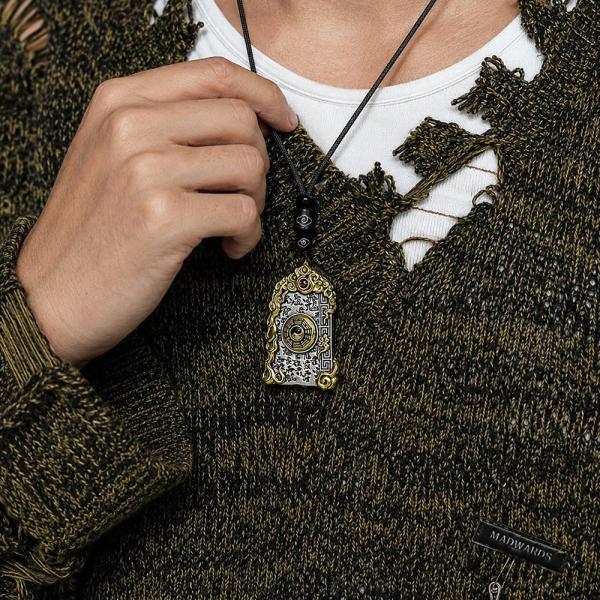
A hui is another way of writing a god's name. In Daoist practice the full name is not written; a hui character stands in for it, one character to one deity, strokes stacked until the original is unreadable. The ten-thousand-deity hui gathers many of them in one place, packed tight across the plaque, so that at a glance it reads as pattern and only up close resolves into characters. Not recognizing them all is normal; there is no need to check each one. Dense strokes tend to merge when cast, so look at whether the lines are clean when you choose. The plaque is a shade thicker than a standard square, and feels solid in the hand.
Enamel fills the hollows of the relief while the raised lines keep the colour of the copper, two textures pressed into one plaque. The relief stands high, so the colour sits below; under light the copper lines come up first and the glaze steps back. That layering depends on the depth of the mould. A shallow mould and the colour smears into one field. Before filling, a ground coat goes onto the copper so the glaze can bite; without it the enamel pulls back in firing. Glaze and copper shrink at different rates, so cooling has to be slow; fast, and it cracks.
Two cords are offered: the pendant alone, or with a sandalwood cord. The sandalwood cord is dark and does not fight the aged tone of the copper. If it wears through you replace a cord, which is less trouble than replacing a chain and carries no risk of a clasp letting go. The knot sits behind the plaque, the skin side is flat, and the cord ends are singed so they will not unravel. Do not pull on it wet, because cotton cord stretches and will not shrink back.
Some people wear a plaque like this as an amulet, others as a good piece of copper. Neither use rules out the other. The hui characters are traced from traditional drafts, where the length of a stroke and the way it begins and ends follow rules; one wrong stroke and anyone who knows the forms will see it. The shop selects widely circulated versions and does not claim that every Daoist house writes them the same. Some hang it from a rear-view mirror, some tuck it into a wallet; the form is not fixed.
White copper in its own colour, unplated, and the hollows will darken first. Brush the relief channels dry with a soft toothbrush and do not pick at them with a needle. Copper is soft, and a pick leaves a scratch that shows more than the dirt did. It contains nickel, so sensitive skin should take note. The plaque has thickness, so take it off to sleep; lying on your side presses it in, and over time the face will mark. Choose an adjustable cord so you can set the length yourself.