


Menu
By theme
By theme

{{ variable.name }} : {{ variable.values[selectedVariantsIndex[variable_index]].name }}
Quantity:
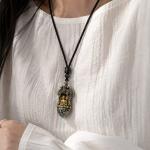
The Saha Three Saints are Shakyamuni Buddha, Avalokiteshvara and Ksitigarbha. The three together are a common group in Han temple sculpture: the Buddha in the middle, the two bodhisattvas flanking, the order fixed and not to be swapped about. Saha means endurance of suffering, the state of beings who settle into pain and will not leave it. The sutras say a good deal about that layer of meaning; on an ornament only the three standing in a row is left.
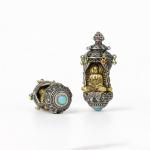
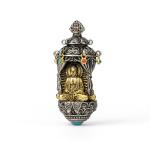
This one is white copper with an aged finish. Aging means dyeing the hollows black and leaving the raised faces bright, so the copper looks as though it has years on it. It is not an old piece, and not cast from a mould taken off one. Know that and there is no let-down at purchase: what it sells is design and workmanship, not age. The rub is done by hand, the pressure uneven, so the black in the hollows varies in thickness and no two in a batch match. Do not make colour your only test. A coat of wax goes on afterwards, sealing the black so it does not rub away in wear.
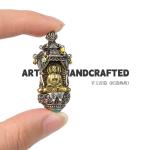
The plaque is long and horizontal, the three abreast. Shrunk to this size the figures can keep only an outline, with drapery and lotus seat suggested by the height of the relief. What to look at on a small plaque is proportion and layering: are the three halos the same size, does the drapery run in one direction, has the modelling of the faces gone soft. Judge it by the standard of temple sculpture and you will be unhappy; ask only whether it works as an ornament. Three in a row, the middle halo largest and the outer two drawn in, is the hierarchy. Three abreast also forces the proportions wide, and the faces can only be small.
Two versions are listed, one with a sandalwood cord and one the plaque alone. The sandalwood cord is dark and sits close to the aged copper face. You can also fit your own chain, since the hole is at the top edge and a fine chain will pass through. A cord-hung pendant sits steady against the chest, while a chain-hung one slides and taps the collarbone as you walk. The back is polished so it does not scratch, and the hollows in front keep their feel under the thumb.
The aged surface carries a dark film, so keep silver cloth and polishing paste away from it. One wipe smears the finish, the black lifts unevenly, and it looks as though the piece has been repaired. A dry cloth for dust is enough, with a soft brush through the hollows. Bag it when it is not being worn, and keep it off hard objects. It contains nickel. Sensitive skin should wear it briefly at first rather than against the flesh all day, and on sweaty summer days wipe it before it goes back in the bag.